


Jacobus Vaet
Te Deum
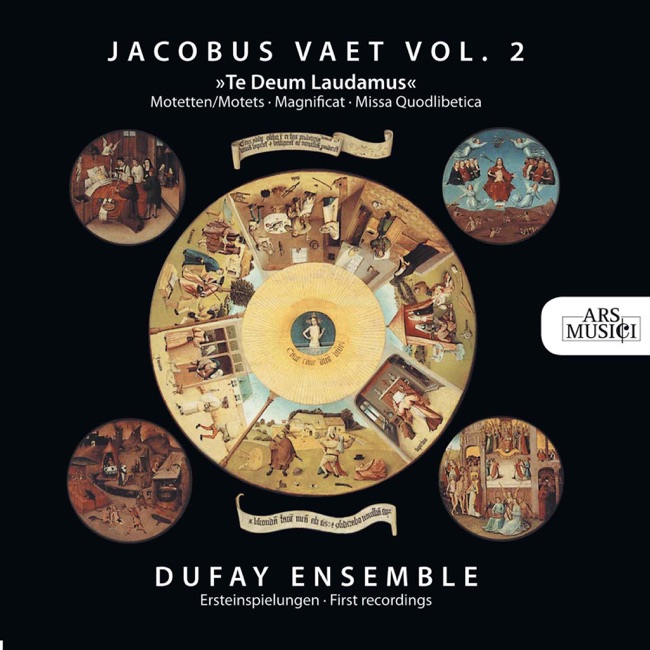
Works Info
Composer:Jacobus VaetGenre:ChoralStyle:ChoralMovement_count:3Movement ....Jacobus Vaet was a Flemish composer who lived during the Renaissance period. He was born in Kortrijk, Belgium, in 1529 and died in Vienna, Austria, in 1567. Vaet was a prolific composer, and his works include masses, motets, chansons, and instrumental music. One of his most famous works is the Te Deum, a sacred choral composition that was written in the mid-16th century. The Te Deum is a hymn of praise that is traditionally sung in the Catholic Church. It is also known as the Ambrosian Hymn, as it is attributed to St. Ambrose, the Bishop of Milan in the 4th century. The hymn is usually sung on special occasions, such as the consecration of a church, the ordination of a priest, or the coronation of a monarch. Vaet's Te Deum is a six-part composition that is scored for two sopranos, alto, tenor, baritone, and bass. It is written in Latin and is divided into six movements. The first movement is an instrumental prelude that sets the tone for the rest of the piece. The second movement is a choral setting of the Te Deum text, which is sung by the full choir. The third movement is a duet for two sopranos, which is followed by a choral setting of the Gloria Patri. The fifth movement is a duet for alto and tenor, and the final movement is a choral setting of the Amen. Vaet's Te Deum is characterized by its rich harmonies, intricate counterpoint, and expressive melodies. The piece is written in a polyphonic style, which means that each voice part has its own melody and rhythm. The voices weave in and out of each other, creating a complex and layered texture. The piece also features frequent changes in tempo and dynamics, which add to its dramatic effect. The Te Deum was premiered in the mid-16th century, and it has since become one of Vaet's most famous works. It is still performed today by choirs around the world, and it is considered to be a masterpiece of Renaissance choral music.More....
