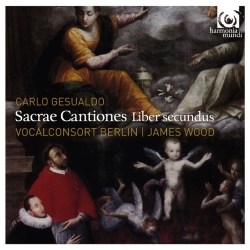
Carlo Gesualdo
Verba mea, W. 9/61
Released Album
Recent Album
-
 Julie WintrebertNovember 22, 2019
 -
-
Featured Album

Works Info
Composer:Carlo GesualdoGenre:ChoralCompose Date:1603Average_duration:2:26Carlo Gesualdo, Prince of Venosa, was an Italian composer of the late Renaissance period. He is known for his highly expressive and chromatic music, which was ahead of its time and anticipated many features of Baroque music. One of his most famous works is "Verba mea, W. 9/61," a setting of the Latin text from Psalm 5. "Verba mea" was composed in the late 16th century, probably around 1590-1595. It is part of Gesualdo's collection of sacred music, which he published in 1603 under the title "Sacrae Cantiones." The work is scored for five voices (SSATB) and is written in the typical style of the late Renaissance, with imitative polyphony and a strong emphasis on text expression. The piece is divided into three movements, each of which corresponds to a different section of the psalm text. The first movement, "Verba mea," is a setting of the opening verses of the psalm, in which the speaker asks God to hear his words and to consider his plea for help. The music is somber and introspective, with a slow tempo and a mournful melody that reflects the speaker's sense of despair. The second movement, "Intellige clamorem meum," is a more lively and energetic section that corresponds to the middle of the psalm. Here, the speaker expresses his confidence that God will hear his cry and come to his aid. The music is more rhythmic and dynamic, with a faster tempo and a more complex texture that reflects the speaker's sense of hope and determination. The final movement, "Pone Domine," is a setting of the closing verses of the psalm, in which the speaker asks God to protect him from his enemies and to bless the righteous. The music is more serene and contemplative, with a slower tempo and a more harmonious texture that reflects the speaker's sense of peace and gratitude. Overall, "Verba mea" is a powerful and emotionally charged work that showcases Gesualdo's unique style and his ability to convey complex emotions through music. The piece is characterized by its expressive chromaticism, its intricate polyphony, and its strong emphasis on text painting and word painting. It remains a popular and influential work in the repertoire of Renaissance sacred music.More....
Works Music
Released Music
1
1:44
Featured Music