Morton Feldman
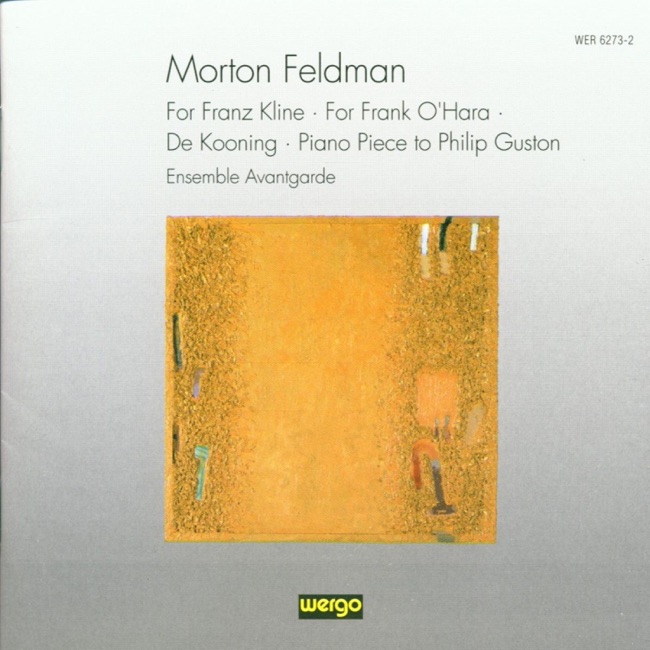
De Kooning
Works Info
Composer:Morton FeldmanGenre:ChamberStyle:Open FormCompose Date:1963Average_duration:12:22Morton Feldman's "De Kooning" is a composition for solo piano that was completed in 1963. The piece is named after the abstract expressionist painter Willem de Kooning, who was a close friend of Feldman's. The premiere of "De Kooning" took place on May 16, 1963, at the New School for Social Research in New York City, with pianist David Tudor performing. The composition consists of three movements, each of which is characterized by a slow and deliberate pace. The first movement is marked by a series of soft, sustained chords that are played in a repetitive pattern. The second movement features a series of delicate, high-pitched notes that are played in a slow and deliberate manner. The final movement is marked by a series of low, rumbling chords that gradually increase in volume and intensity. One of the most notable characteristics of "De Kooning" is its use of silence. Throughout the composition, Feldman employs long periods of silence, which serve to heighten the impact of the notes that are played. This use of silence is a hallmark of Feldman's style, and it is often cited as one of the defining features of his music. Another characteristic of "De Kooning" is its emphasis on texture and timbre. Feldman was known for his interest in the subtle nuances of sound, and this is evident in the way that he uses the piano to create a rich and varied sonic landscape. The piece is also notable for its use of extended techniques, such as playing the strings inside the piano, which add to the overall complexity of the sound. Overall, "De Kooning" is a challenging and complex composition that requires a high level of skill and sensitivity from the performer. Its slow and deliberate pace, use of silence, and emphasis on texture and timbre make it a unique and compelling work in the canon of contemporary classical music.More....