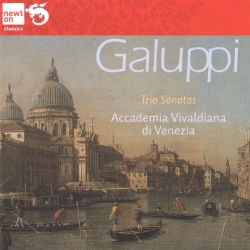
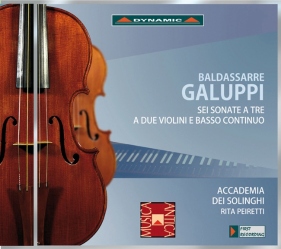
Baldassare Galuppi
Sonata for 2 violins & continuo No. 2 in F major
Released Album
Recent Album
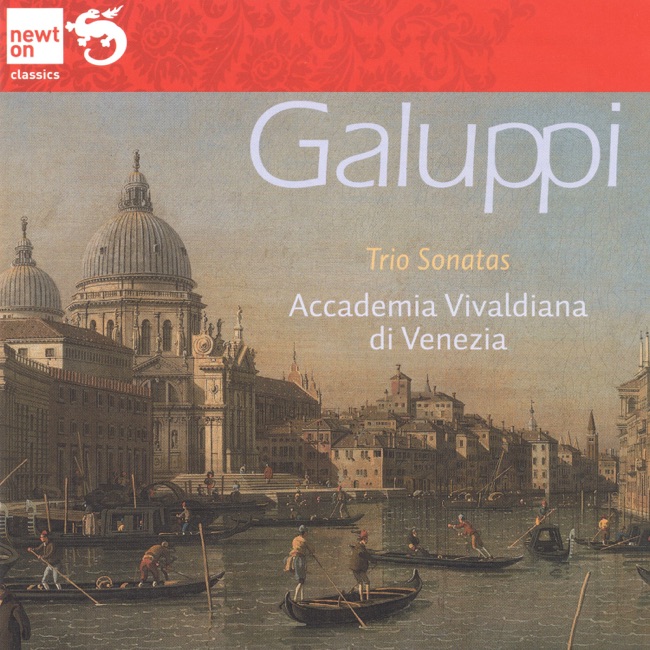
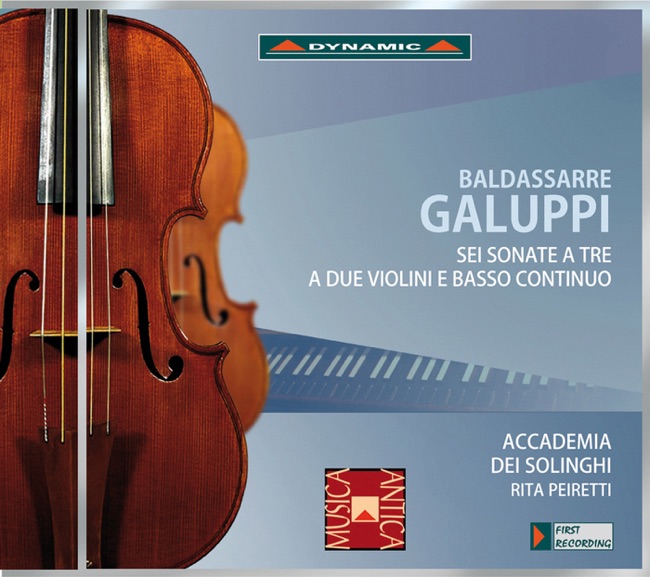
Works Info
Composer:Baldassare GaluppiGenre:ChamberAverage_duration:11:20Movement_count:3Movement ....Baldassare Galuppi, also known as Il Buranello, was an Italian composer of the Baroque era. He was born in 1706 in the Venetian Republic and died in 1785 in St. Petersburg, Russia. Galuppi was a prolific composer, producing over 100 operas, as well as numerous instrumental works, including sonatas for various instruments. One of Galuppi's most famous instrumental works is his Sonata for 2 violins & continuo No. 2 in F major. This sonata was composed in the mid-18th century and premiered in Venice, Italy. It is a three-movement work, with each movement showcasing Galuppi's skill in writing for the violin. The first movement, marked Allegro, is a lively and energetic piece that features a call-and-response between the two violins. The second movement, marked Andante, is a slower and more lyrical piece that showcases the violins' ability to play in harmony. The final movement, marked Allegro assai, is a fast and virtuosic piece that features intricate runs and arpeggios for both violins. One of the characteristics of Galuppi's Sonata for 2 violins & continuo No. 2 in F major is its use of the continuo. The continuo, which is typically played by a harpsichord or organ, provides a harmonic foundation for the violins to play over. Galuppi's use of the continuo adds depth and richness to the sonata, and allows the violins to play more complex and intricate melodies. Another characteristic of the sonata is Galuppi's use of ornamentation. Ornamentation, which includes trills, turns, and other embellishments, was a common feature of Baroque music. Galuppi's use of ornamentation adds a sense of elegance and sophistication to the sonata, and showcases the virtuosity of the violinists. Overall, Galuppi's Sonata for 2 violins & continuo No. 2 in F major is a beautiful and intricate work that showcases the composer's skill in writing for the violin. Its use of the continuo and ornamentation add depth and richness to the sonata, and make it a beloved piece in the Baroque repertoire.More....
Works Music