Thomas Morley
Sing wee and chaunt it
Released Album
Recent Album




Works Info
Composer:Thomas MorleyGenre:ChoralStyle:MadrigalCompose Date:before 1595Publication Date:1595Average_duration:2:06"Sing wee and chaunt it" is a madrigal composed by Thomas Morley, an English composer, organist, and theorist of the Renaissance era. The piece was composed in the late 16th century, around 1595, and was first published in Morley's collection of madrigals, "The Triumphs of Oriana," in 1601. The madrigal is written for four voices, typically two sopranos, a tenor, and a bass, and is characterized by its lively and playful nature. The piece is in a lively triple meter, with a quick tempo and a dance-like quality. The text of the madrigal is in English and is a celebration of music and singing. The piece is divided into three distinct sections or movements. The first section begins with the words "Sing wee," and features a lively and rhythmic melody that is passed between the voices. The second section, beginning with the words "And as we sing," is more subdued and features a slower, more lyrical melody. The final section, beginning with the words "Then let's all sing," returns to the lively and rhythmic character of the first section, with the voices interweaving and overlapping in a joyful celebration of music. One of the most notable characteristics of "Sing wee and chaunt it" is its use of word painting, a technique in which the music reflects the meaning of the text. For example, the word "sing" is repeated throughout the piece, with each repetition becoming more lively and exuberant, reflecting the joy and energy of singing. Additionally, the word "chaunt" is set to a descending melody, reflecting the downward motion of the word. Overall, "Sing wee and chaunt it" is a lively and joyful madrigal that celebrates the power and beauty of music. Its playful melody and use of word painting make it a beloved piece of Renaissance music that continues to be performed and enjoyed today.More....
Works Music
Released Music



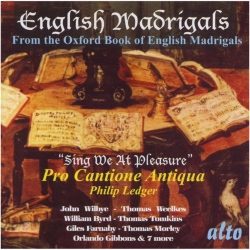

9
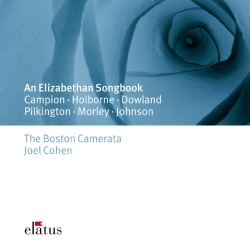
3:4