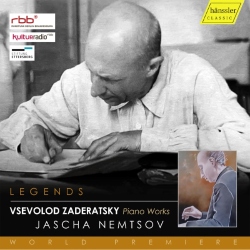
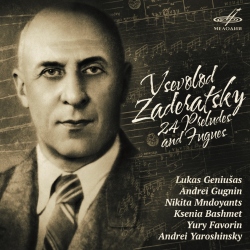
Vsevolod Zaderatsky
Prelude and Fugue No. 19 for piano in E flat major
Released Album
Recent Album
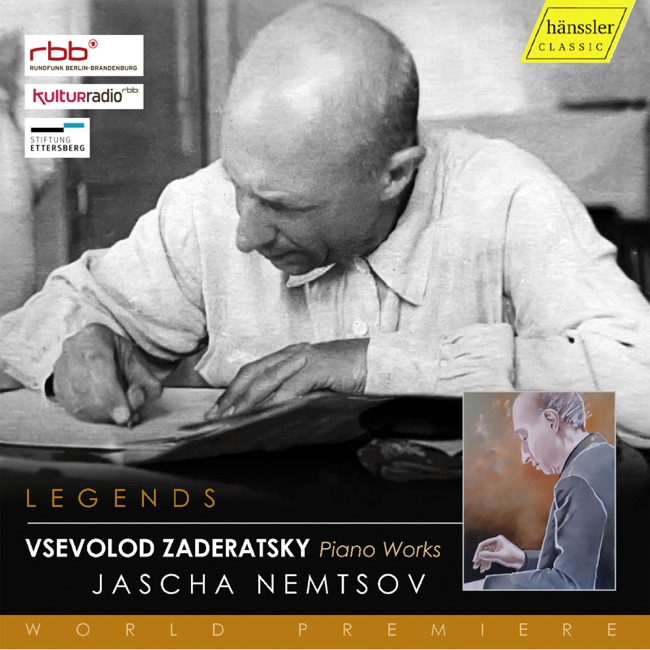
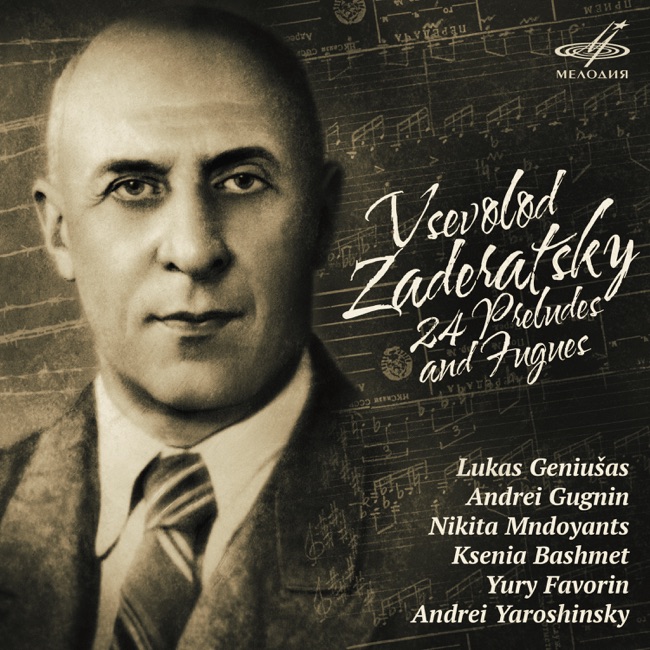
Works Info
Composer:Vsevolod ZaderatskyGenre:KeyboardCompose Date:1937-1939Average_duration:5:26Movement_count:2Movement ....Vsevolod Zaderatsky's Prelude and Fugue No. 19 for piano in E flat major was composed in 1951 while the composer was serving a 10-year sentence in a Soviet labor camp. The piece was premiered in 1956 by the pianist Maria Yudina, who was a close friend of Zaderatsky and had smuggled his compositions out of the labor camp. The Prelude and Fugue No. 19 is one of 24 preludes and fugues that Zaderatsky composed while in prison. The pieces were written on scraps of paper and smuggled out of the camp by Yudina. The preludes and fugues were not intended to be performed as a cycle, but rather as individual pieces. The Prelude and Fugue No. 19 is divided into two movements, a prelude and a fugue. The prelude is marked Andante and is in E flat major. It begins with a simple, lyrical melody in the right hand, accompanied by a flowing arpeggio in the left hand. The melody is then repeated with a more complex accompaniment, featuring a descending bass line. The prelude ends with a return to the simple melody and accompaniment of the opening. The fugue is marked Allegro and is also in E flat major. It begins with a lively subject in the right hand, accompanied by a rhythmic figure in the left hand. The subject is then imitated in the left hand, followed by a third entrance in the right hand. The fugue features several episodes, including a section in which the subject is played in stretto, with the entrances overlapping. The fugue ends with a triumphant restatement of the subject. The Prelude and Fugue No. 19 is characteristic of Zaderatsky's style, which is influenced by the music of Bach, Chopin, and Scriabin. The piece features a lyrical melody, complex harmonies, and virtuosic figurations. The prelude and fugue are tightly integrated, with the prelude providing a lyrical introduction to the more complex fugue. The piece is a testament to Zaderatsky's resilience and creativity in the face of adversity, and stands as a powerful example of the human spirit's ability to triumph over oppression.More....
Works Music