


Heitor Villa-Lobos
Canções típicas brasileiras (13), A. 159
Released Album
Recent Album
Featured Album
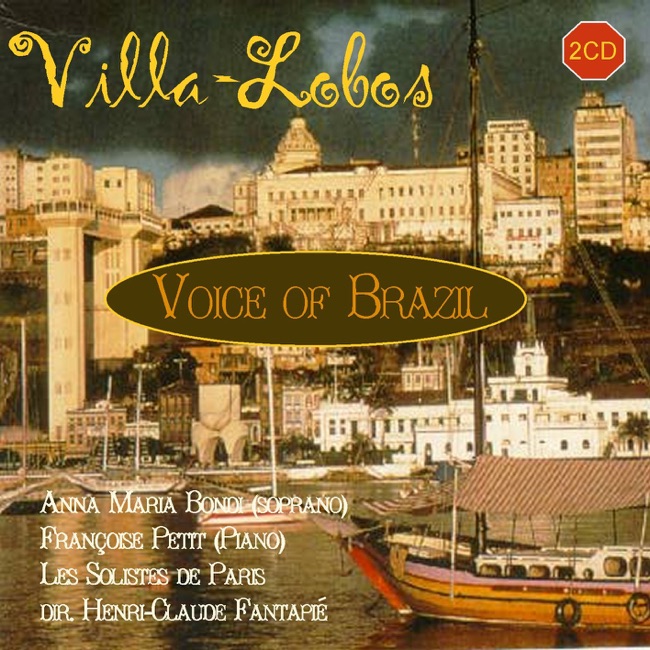
Works Info
Composer:Heitor Villa-LobosGenre:VocalStyle:SongCompose Date:1919 - 1935Movement_count:13Movement ...."Canções típicas brasileiras (13), A. 159" is a collection of thirteen songs composed by Heitor Villa-Lobos, one of the most important Brazilian composers of the 20th century. The collection was composed in 1926 and premiered in the same year in Rio de Janeiro, Brazil. The collection is divided into thirteen movements, each of which is a song that reflects the diversity of Brazilian music. The songs are based on traditional Brazilian folk melodies and rhythms, and Villa-Lobos arranged them for voice and piano. The songs are: 1. "Modinha" - a slow, romantic song in the style of the modinha, a popular Brazilian song form from the 18th century. 2. "Lundu" - a lively dance in the style of the lundu, a popular Brazilian dance from the 19th century. 3. "Xangô" - a song in the style of the Afro-Brazilian religion of Candomblé, which honors the deity Xangô. 4. "Cantiga" - a simple, folk-like song that tells a story. 5. "Maracatu" - a lively dance in the style of the maracatu, a popular Brazilian dance from the northeast of Brazil. 6. "Adeus" - a slow, melancholic song that expresses sadness and longing. 7. "Ciranda" - a lively dance in the style of the ciranda, a popular Brazilian dance from the northeast of Brazil. 8. "Baião" - a lively dance in the style of the baião, a popular Brazilian dance from the northeast of Brazil. 9. "Samba" - a lively dance in the style of the samba, one of the most popular Brazilian dances. 10. "Cantiga de ninar" - a lullaby that is sung to put children to sleep. 11. "Choro" - a lively instrumental piece in the style of the choro, a popular Brazilian instrumental music. 12. "Toada" - a slow, romantic song in the style of the toada, a popular Brazilian song form from the Amazon region. 13. "Cateretê" - a lively dance in the style of the cateretê, a popular Brazilian dance from the southeast of Brazil. The characteristics of "Canções típicas brasileiras (13), A. 159" reflect Villa-Lobos's interest in Brazilian folk music and his desire to create a national music that reflected the diversity of Brazilian culture. The songs are based on traditional Brazilian melodies and rhythms, but Villa-Lobos's arrangements give them a modern, sophisticated sound. The songs are also notable for their use of dissonance and unconventional harmonies, which give them a unique and distinctive sound. Overall, "Canções típicas brasileiras (13), A. 159" is an important work in the history of Brazilian music, and it remains a popular and influential collection of songs to this day.More....
Works Music
Released Music
1
Brazilian typical songs (13), A. 159
No. 4 in G Minor, Xangô, Canto Fetiche de Makumba. Animado
3:1
Featured Music
2
1:6