


Johann Friedrich Fasch
Sonata á 4, for violin, oboe, horn & continuo
Released Album
Recent Album
Works Info
Composer:Johann Friedrich FaschGenre:ChamberStyle:SonataAverage_duration:7:14Movement_count:4Movement ....Johann Friedrich Fasch's Sonata á 4 for violin, oboe, horn, and continuo is a Baroque chamber music piece that was composed in the early 18th century. The exact date of composition is unknown, but it is believed to have been written between 1710 and 1720. The piece is in four movements and is approximately 12 minutes in length. The premiere of the Sonata á 4 is also unknown, but it is likely that it was performed in the court of Zerbst, where Fasch was employed as a Kapellmeister. The piece was likely written for the court's chamber music ensemble, which included the instruments featured in the sonata. The first movement of the Sonata á 4 is marked "Allegro" and is in a fast tempo. It is written in a ritornello form, with the main theme played by the violin and oboe and the horn providing a bass line. The second movement is marked "Largo" and is in a slow tempo. It features a lyrical melody played by the violin and oboe, with the horn providing a harmonic accompaniment. The third movement is marked "Allegro" and is in a fast tempo. It is written in a fugue form, with the violin and oboe playing the main theme and the horn providing a bass line. The final movement is marked "Allegro" and is in a fast tempo. It is written in a dance-like style, with the violin and oboe playing a lively melody and the horn providing a rhythmic accompaniment. The Sonata á 4 is characteristic of Fasch's style, which is known for its clarity, elegance, and balance. Fasch was a master of counterpoint, and this is evident in the fugue-like third movement of the sonata. The piece also showcases Fasch's skill in writing for the horn, which was a relatively new instrument at the time. The horn part is written in a way that highlights its unique timbre and range, and it provides a rich harmonic foundation for the other instruments. Overall, the Sonata á 4 for violin, oboe, horn, and continuo is a fine example of Baroque chamber music. Its elegant melodies, intricate counterpoint, and skillful use of instruments make it a delightful piece to listen to and perform.More....
Works Music
Released Music
1
2:14
2
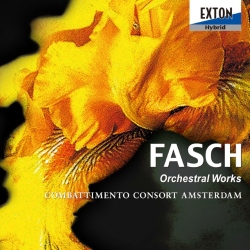
1:57
3
1:2