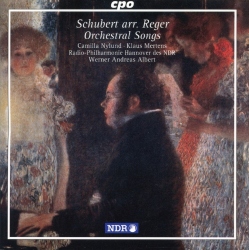
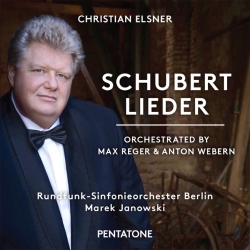
Max Reger
Prometheus (after Schubert, D. 674)
Released Album
Recent Album


Featured Album

Works Info
Composer:Max RegerGenre:VocalStyle:Vocal MusicCompose Date:1914Average_duration:5:48Prometheus (after Schubert, D. 674) is a composition by Max Reger, a German composer, pianist, and conductor. The piece was composed in 1913 and premiered on January 25, 1914, in Leipzig, Germany. It is a set of variations for orchestra based on Franz Schubert's lied "Prometheus," which was composed in 1819. The piece consists of six movements, each of which is a variation on Schubert's original melody. The first movement is a slow introduction that sets the mood for the piece. The second movement is a lively scherzo that features the woodwinds and strings. The third movement is a lyrical adagio that showcases the brass section. The fourth movement is a playful allegro that features the percussion section. The fifth movement is a dramatic and intense variation that builds to a climax. The final movement is a triumphant finale that brings the piece to a close. Reger's composition is characterized by its use of chromaticism, complex harmonies, and dense textures. He takes Schubert's simple melody and transforms it into a complex and intricate work that showcases his skill as a composer. The piece is also notable for its use of orchestration, with Reger using the full range of the orchestra to create a rich and varied sound. Overall, Prometheus (after Schubert, D. 674) is a masterful composition that demonstrates Reger's skill as a composer and his ability to transform a simple melody into a complex and intricate work. Its premiere in 1914 was well-received, and it remains a popular piece in the orchestral repertoire today.More....
Works Music