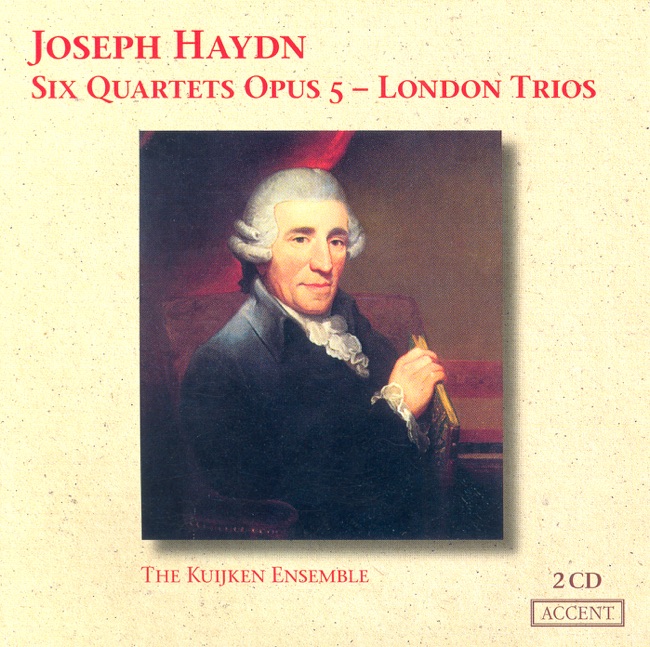
Franz Joseph Haydn
Quartet for flute, violin, viola & cello in G major, H. 2/G4
Released Album
Recent Album
Works Info
Composer:Franz Joseph HaydnGenre:ChamberStyle:Chamber MusicCompose Date:before 1768Average_duration:15:34Franz Joseph Haydn's Quartet for flute, violin, viola & cello in G major, H. 2/G4, was composed in 1780. It premiered in Vienna, Austria, and was dedicated to Countess Maria Thun. The quartet consists of three movements: Allegro, Adagio, and Rondo. The first movement, Allegro, is in sonata form and begins with a lively and cheerful theme played by the flute and violin. The viola and cello then join in, creating a full and harmonious sound. The development section explores the themes introduced in the exposition, and the movement ends with a recapitulation of the main theme. The second movement, Adagio, is a slow and expressive piece that showcases the flute's lyrical abilities. The violin, viola, and cello provide a delicate accompaniment, creating a peaceful and introspective atmosphere. The final movement, Rondo, is a lively and playful piece that features a recurring theme played by the flute and violin. The viola and cello provide a rhythmic accompaniment, creating a dance-like feel. The movement ends with a coda that brings the quartet to a joyful and satisfying conclusion. Haydn's Quartet for flute, violin, viola & cello in G major is characterized by its light and elegant melodies, intricate harmonies, and balanced instrumentation. The flute is given a prominent role throughout the quartet, showcasing its versatility and expressive capabilities. The quartet is a testament to Haydn's skill as a composer and his ability to create music that is both technically challenging and emotionally engaging.More....
Works Music