Napoléon Coste
Etude for guitar in D major, Op. 38/20
Released Album
Recent Album
Works Info
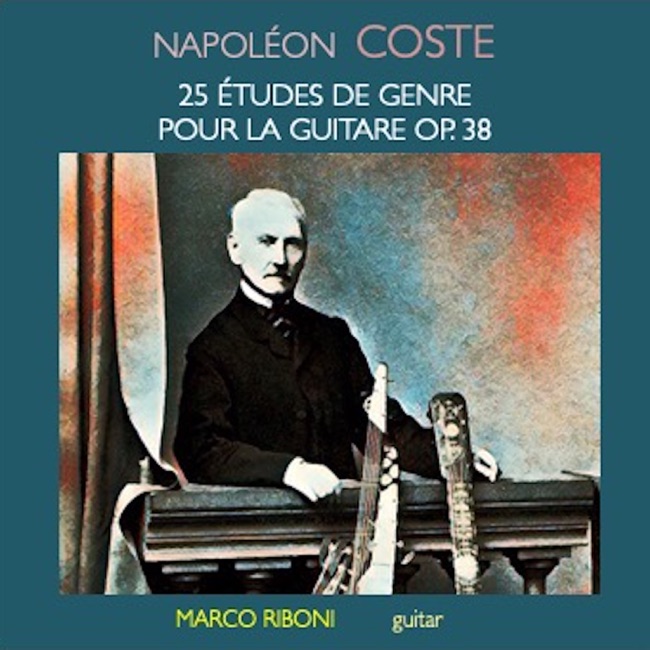
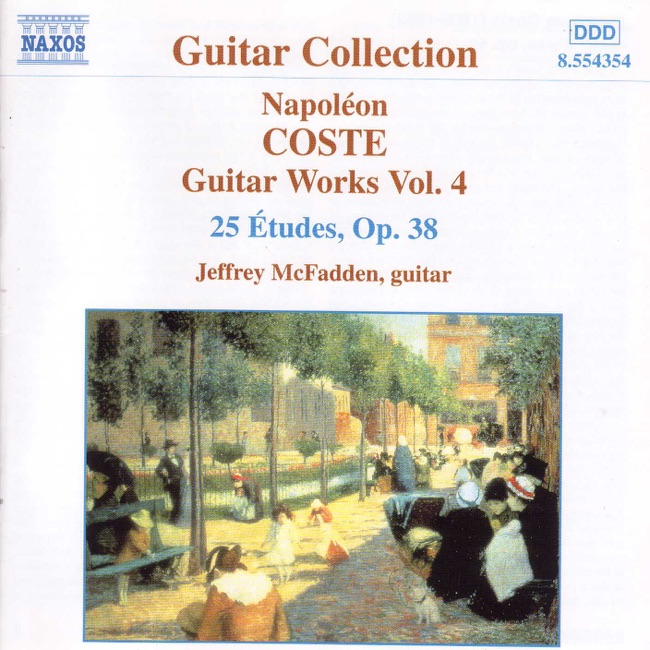
Composer:Napoléon CosteGenre:ChamberStyle:EtudeAverage_duration:2:41Etude for guitar in D major, Op. 38/20 is a piece composed by Napoléon Coste, a French guitarist and composer who lived from 1805 to 1883. The piece was composed in the mid-19th century and was first published in 1863. It is one of the many etudes that Coste composed for the guitar, and it is considered to be one of his most popular works. The Etude for guitar in D major, Op. 38/20 is a solo piece for the guitar, and it is divided into three movements. The first movement is marked Allegro, and it is characterized by its lively and energetic tempo. The second movement is marked Andantino, and it is a slower and more lyrical section of the piece. The third movement is marked Allegro moderato, and it is a return to the faster tempo of the first movement. The piece is written in D major, and it features a number of technical challenges for the guitarist. These include rapid arpeggios, intricate fingerings, and challenging chord progressions. The piece also features a number of dynamic changes, which require the guitarist to be able to play both loudly and softly. One of the most notable characteristics of the Etude for guitar in D major, Op. 38/20 is its use of harmonics. Harmonics are a technique in which the guitarist lightly touches the string at a specific point to produce a high-pitched, bell-like sound. Coste uses harmonics throughout the piece to create a shimmering, ethereal effect. The Etude for guitar in D major, Op. 38/20 premiered in the mid-19th century, and it has since become a staple of the classical guitar repertoire. It is a challenging and rewarding piece for the guitarist to play, and it showcases Coste's skill as both a composer and a guitarist.More....
Works Music