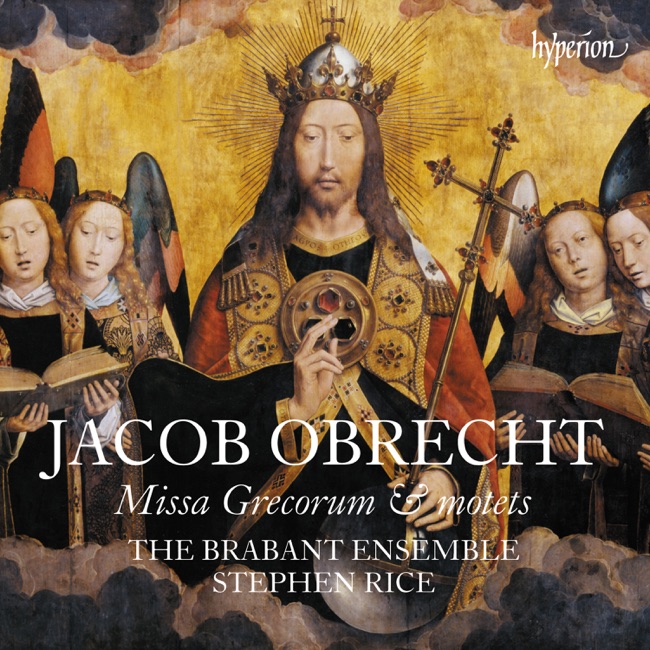
Jacob Obrecht
Missa grecorum
Works Info
Composer:Jacob ObrechtGenre:ChoralCompose Date:ca. 1490Average_duration:34:23Jacob Obrecht's 'Missa grecorum' is a renowned choral composition that showcases the composer's mastery of polyphonic writing. This mass was composed during the Renaissance period, specifically in the late 15th century. The exact date of its composition is uncertain, but it is believed to have been written around 1484-1485.$$$The 'Missa grecorum' is known for its grandeur and complexity, consisting of six movements: Kyrie, Gloria, Credo, Sanctus, Agnus Dei I, and Agnus Dei II. Each movement is meticulously crafted, displaying Obrecht's skillful handling of counterpoint and his ability to create rich harmonic textures.$$$The Kyrie, the opening movement, sets the tone for the entire mass. It begins with a solemn and reverent atmosphere, gradually building up to a powerful climax. The Gloria, a joyful and exuberant movement, features intricate vocal interplay and vibrant melodic lines. The Credo, the longest movement, is characterized by its expansive structure and intricate polyphony, reflecting the profound nature of the text.$$$The Sanctus, a majestic movement, is marked by its soaring melodies and intricate vocal imitations. It culminates in a jubilant Hosanna section, showcasing Obrecht's ability to create a sense of awe and grandeur. The Agnus Dei I and Agnus Dei II, the final movements, are characterized by their serene and contemplative nature, providing a peaceful conclusion to the mass.$$$One of the notable characteristics of the 'Missa grecorum' is Obrecht's use of imitation, where melodic ideas are passed between different voices, creating a sense of unity and coherence. The mass also demonstrates Obrecht's skillful handling of harmony, with rich and colorful chord progressions that enhance the emotional impact of the music.$$$Overall, the 'Missa grecorum' is a testament to Jacob Obrecht's mastery of polyphonic writing and his ability to create intricate and emotionally compelling choral compositions. Its premiere might have taken place in a sacred setting, such as a cathedral or a chapel, where its grandeur and spiritual depth could be fully appreciated.More....
Works Music
Featured Music