Paolo da Firenze
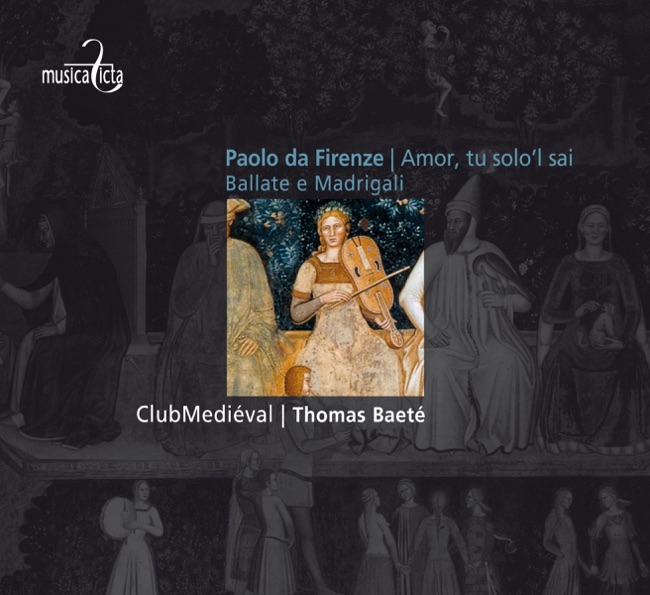
Amor, tu solo 'l sai
Released Album
Recent Album
Works Info
Composer:Paolo da FirenzeGenre:VocalStyle:Vocal MusicAverage_duration:2:50"Amor, tu solo 'l sai" is a secular song composed by Paolo da Firenze, an Italian composer and music theorist of the 14th century. The song is believed to have been composed in the early 14th century, during the Ars Nova period of music. The song is written in Italian and is a ballata, a popular form of secular song in Italy during the 14th century. It is a three-voice composition, with the melody sung by the top voice and the other two voices providing harmonic support. The song is characterized by its lively and rhythmic melody, which is typical of the Ars Nova style. The premiere of "Amor, tu solo 'l sai" is unknown, but it was likely performed in the courts of Italy during the 14th century. The song was popular during its time and was widely circulated in manuscript form. The song is divided into three movements, each with its own distinct melody and lyrics. The first movement begins with the line "Amor, tu solo 'l sai," which translates to "Love, only you know it." The melody is lively and upbeat, with a rhythmic quality that is typical of the Ars Nova style. The lyrics speak of the power of love and its ability to bring joy and happiness to those who experience it. The second movement begins with the line "Io non compro più speranza," which translates to "I no longer buy hope." The melody is slower and more contemplative than the first movement, with a more somber tone. The lyrics speak of the pain and sorrow that can come with love, and the singer's decision to give up hope for a happy ending. The third movement begins with the line "Amor, tu vedi ogni cosa," which translates to "Love, you see everything." The melody is similar to the first movement, with a lively and rhythmic quality. The lyrics speak of the all-seeing power of love, and its ability to bring people together despite their differences. Overall, "Amor, tu solo 'l sai" is a beautiful example of the Ars Nova style of music, with its lively melodies and intricate harmonies. The song speaks to the power of love, both its ability to bring joy and happiness, and its ability to bring pain and sorrow. It remains a popular piece of music to this day, and is often performed by vocal ensembles and choirs.More....