


Johann Pachelbel
Der Herr is König und herrlich geschmückt (I), T. 352
Released Album
Recent Album
Works Info
Composer:Johann PachelbelGenre:ChoralStyle:ChoralCompose Date:before Apr 1706Publication Date:1967Average_duration:3:38Johann Pachelbel's 'Der Herr is König und herrlich geschmückt (I), T. 352' is a sacred vocal work composed in the Baroque era. The piece was composed in the late 17th century, around 1680, during Pachelbel's time as the organist at the St. Sebaldus Church in Nuremberg, Germany. The piece is a sacred motet, which is a type of vocal composition that is typically performed in a religious setting. 'Der Herr is König und herrlich geschmückt (I), T. 352' is written for four-part choir, with a basso continuo accompaniment. The piece is divided into three movements, each with its own distinct character and musical style. The first movement is a lively and joyful setting of Psalm 93, which celebrates God's sovereignty and power. The choir sings in a homophonic style, with all four parts singing the same text at the same time. The basso continuo provides a lively and rhythmic accompaniment, with fast-moving chords and a driving bass line. The second movement is a slower and more contemplative setting of Psalm 97, which speaks of God's righteousness and justice. The choir sings in a more polyphonic style, with each part singing its own melody and rhythm. The basso continuo provides a more subdued accompaniment, with gentle arpeggios and sustained chords. The final movement is a triumphant setting of Psalm 99, which praises God's holiness and greatness. The choir sings in a more complex polyphonic style, with each part weaving in and out of the texture. The basso continuo provides a powerful and majestic accompaniment, with grand chords and a soaring bass line. Overall, 'Der Herr is König und herrlich geschmückt (I), T. 352' is a masterful example of Pachelbel's skill as a composer of sacred music. The piece showcases his ability to create complex and intricate vocal textures, while also maintaining a sense of joy and celebration. It premiered in the late 17th century and continues to be performed and admired by musicians and audiences today.More....
Works Music
Released Music
2
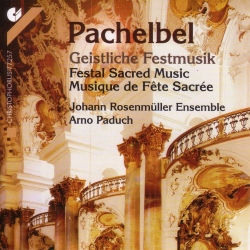
4:41
3
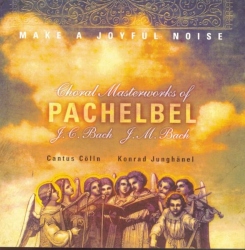
3:16