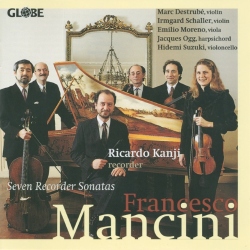
Francesco Mancini
Sonata No. 6 in D minor
Released Album
Recent Album
Works Info
Composer:Francesco ManciniGenre:ChamberStyle:SonataAverage_duration:9:38Movement_count:4Movement ....Francesco Mancini was an Italian composer and oboist who lived from 1672 to 1737. He was a prominent figure in the Baroque era and was known for his instrumental music, particularly his sonatas. One of his most famous works is the Sonata No. 6 in D minor, which was composed for oboe and basso continuo. The Sonata No. 6 in D minor was composed in the early 18th century, although the exact date is unknown. It is believed to have been written sometime between 1710 and 1720. The sonata consists of three movements, each with its own distinct character and style. The first movement, marked Adagio, is a slow and mournful piece that begins with a simple melody played by the oboe. The basso continuo provides a steady accompaniment, with occasional flourishes that add to the overall texture of the piece. The movement gradually builds in intensity, with the oboe playing more complex and virtuosic passages as it reaches its climax. The second movement, marked Allegro, is a lively and energetic piece that contrasts sharply with the first movement. The oboe and basso continuo engage in a lively dialogue, with each instrument taking turns playing the main melody. The movement is characterized by its fast tempo and intricate rhythms, which showcase Mancini's skill as a composer. The final movement, marked Grave, is a slow and solemn piece that brings the sonata to a close. The oboe plays a simple and plaintive melody, while the basso continuo provides a gentle accompaniment. The movement is notable for its use of dissonance and chromaticism, which create a sense of tension and unease. Overall, the Sonata No. 6 in D minor is a beautiful and expressive work that showcases Mancini's skill as a composer and oboist. Its three movements each have their own distinct character and style, making it a varied and engaging piece of music.More....