László Lajtha
Marionettes, Op. 26
Released Album
Recent Album

Works Info
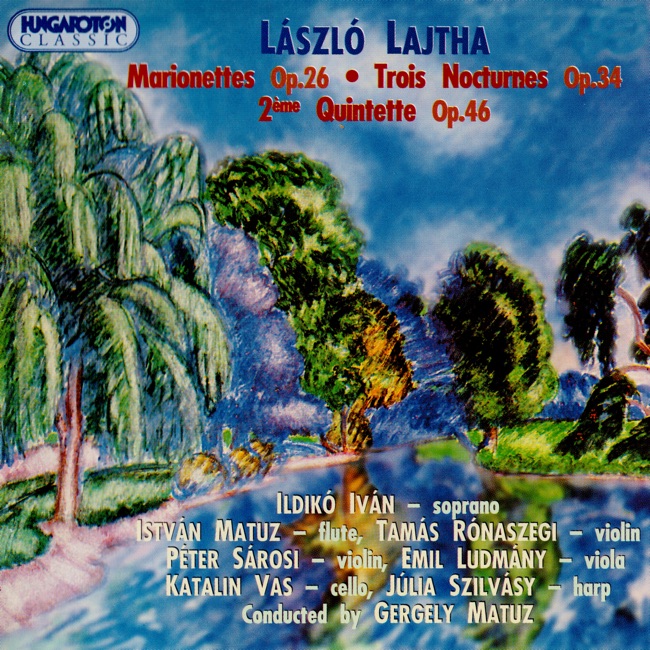
Composer:László LajthaGenre:ChamberStyle:Character PieceCompose Date:1937Average_duration:25:37Marionettes, Op. 26 is a composition for chamber orchestra by Hungarian composer László Lajtha. It was composed in 1930 and premiered on March 22, 1931, in Budapest, Hungary. The piece consists of five movements and has a total duration of approximately 20 minutes. The first movement, "Prelude," sets the tone for the entire piece with its playful and whimsical melody. The second movement, "The Dancing Doll," is a lively and energetic dance that features a solo violin and a pizzicato accompaniment. The third movement, "The Sad Clown," is a slow and melancholic piece that features a solo cello and a mournful melody. The fourth movement, "The Harlequin," is a fast and frenzied dance that features a solo clarinet and a syncopated rhythm. The final movement, "The Marionettes' Ball," is a lively and joyful dance that brings the piece to a rousing conclusion. One of the most notable characteristics of Marionettes, Op. 26 is its use of instrumentation. Lajtha employs a wide variety of instruments, including strings, woodwinds, brass, and percussion, to create a rich and colorful sound. He also makes use of solo instruments to highlight specific melodies and themes throughout the piece. Another characteristic of the piece is its playful and whimsical nature. Lajtha was inspired by the world of puppetry and used the marionette as a metaphor for the human condition. The piece explores themes of joy, sadness, and the complexities of human emotion through the lens of the marionette. Overall, Marionettes, Op. 26 is a charming and delightful piece of music that showcases Lajtha's skill as a composer. Its playful melodies, colorful instrumentation, and exploration of human emotion make it a timeless work that continues to captivate audiences today.More....