Teizo Matsumura
Poem I, for shakuhachi & koto
Released Album
Recent Album
Works Info
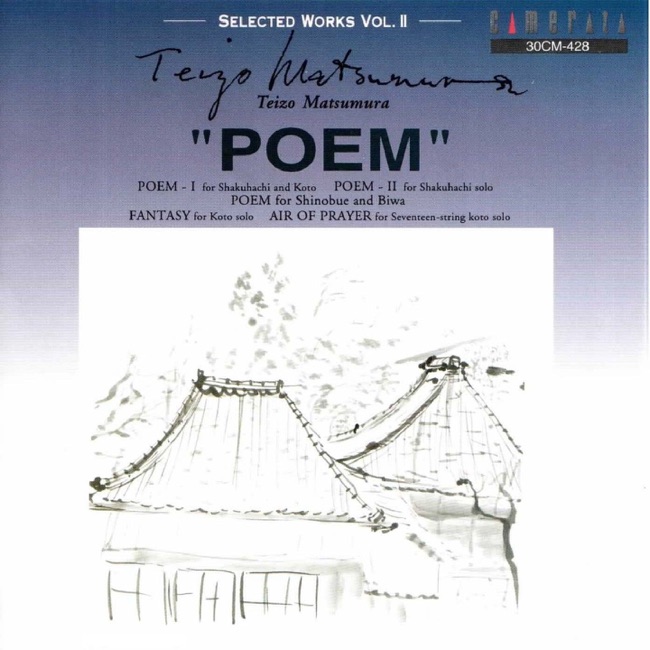
Composer:Teizo MatsumuraGenre:ChamberStyle:Chamber MusicCompose Date:1969Average_duration:14:19Teizo Matsumura was a Japanese composer who was born on October 17, 1929, in Tokyo. He was a prominent figure in the Japanese contemporary music scene and was known for his unique blend of traditional Japanese music and Western classical music. One of his most famous works is "Poem I, for shakuhachi & koto," which was composed in 1960. "Poem I" is a chamber music piece that features two traditional Japanese instruments, the shakuhachi and the koto. The shakuhachi is a bamboo flute that is often used in traditional Japanese music, while the koto is a stringed instrument that is similar to a harp. The piece is divided into three movements, each of which has its own distinct characteristics. The first movement of "Poem I" is marked "Moderato" and is characterized by a slow, steady rhythm. The shakuhachi and koto play in unison, creating a haunting, ethereal sound. The melody is simple and repetitive, with the shakuhachi playing long, sustained notes while the koto provides a gentle, plucked accompaniment. The second movement of "Poem I" is marked "Allegro" and is much more lively than the first. The shakuhachi and koto play in a call-and-response style, with the shakuhachi playing short, staccato notes while the koto responds with quick, plucked notes. The melody is more complex than in the first movement, with the two instruments weaving in and out of each other to create a dynamic, energetic sound. The third and final movement of "Poem I" is marked "Adagio" and is the most introspective of the three. The shakuhachi plays a mournful melody while the koto provides a gentle, supportive accompaniment. The melody is slow and contemplative, with the shakuhachi playing long, sustained notes that gradually fade away into silence. "Poem I" premiered in Tokyo in 1960 and quickly became one of Matsumura's most famous works. It is a beautiful example of his unique blend of traditional Japanese music and Western classical music, and it showcases the beauty and versatility of the shakuhachi and koto.More....