James MacMillan
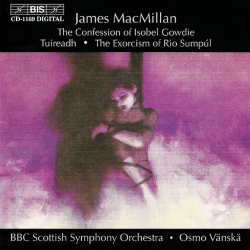
The Confession of Isobel Gowdie
Released Album
Recent Album
Featured Album
Works Info
Composer:James MacMillanGenre:OrchestralStyle:Tone PoemCompose Date:1990Average_duration:25:32The Confession of Isobel Gowdie is a contemporary classical composition by Scottish composer James MacMillan. It was composed in 1990 and premiered on August 28, 1990, at the Edinburgh International Festival. The piece is divided into four movements and is approximately 25 minutes in length. The Confession of Isobel Gowdie is inspired by the true story of Isobel Gowdie, a Scottish woman who was accused of witchcraft and executed in 1662. The piece is a musical representation of her confession, which was obtained through torture and ultimately led to her execution. The first movement, titled "The Burning," begins with a haunting melody played by the strings. The music gradually builds in intensity, with the addition of percussion and brass instruments. The movement ends with a dramatic climax, representing the burning of Isobel Gowdie at the stake. The second movement, "The Torture," is a slow and mournful piece, with a solo violin representing the voice of Isobel Gowdie. The music is meant to convey the pain and suffering she endured during her torture. The third movement, "The Confession," is the centerpiece of the piece. It begins with a solo cello playing a mournful melody, which is then taken up by the rest of the orchestra. The music builds in intensity as Isobel Gowdie's confession becomes more and more frenzied. The movement ends with a sudden silence, representing her eventual death. The final movement, "The Burning Again," is a reprise of the first movement. The music is more subdued this time, with a sense of resignation and acceptance. The piece ends with a final chord, representing the end of Isobel Gowdie's life. The Confession of Isobel Gowdie is characterized by its use of Scottish folk melodies and its intense emotional content. The piece is a powerful exploration of the themes of persecution, torture, and confession, and is considered one of MacMillan's most important works.More....
Works Music
Released Music
Featured Music