Alan Hovhaness
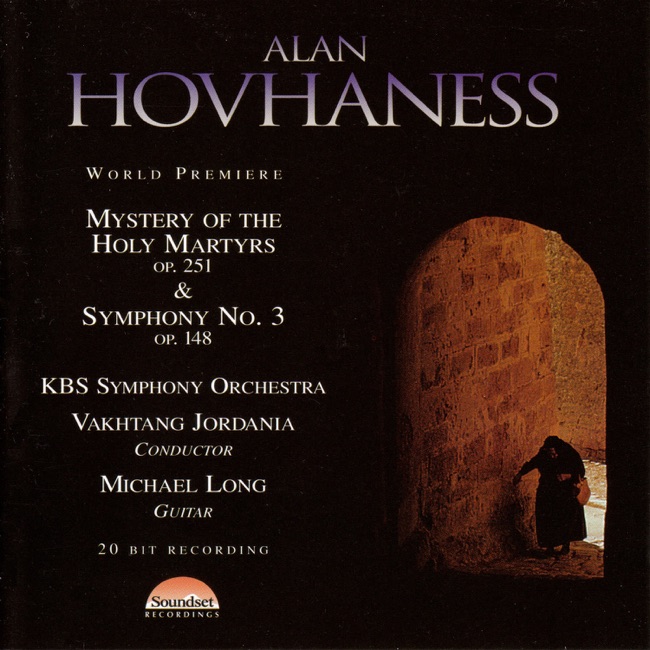
Khorhoort Nahadagats, Op. 251
Released Album
Recent Album

Works Info
Composer:Alan HovhanessGenre:ConcertoStyle:ConcertoCompose Date:1972Average_duration:37:40Khorhoort Nahadagats, Op. 251 is a composition by American-Armenian composer Alan Hovhaness. It was composed in 1972 and premiered on May 6, 1973, by the Boston Symphony Orchestra under the direction of Seiji Ozawa. The title of the piece translates to "Alleluia and Fugue" in English. The composition consists of three movements. The first movement, "Alleluia," is a slow and meditative piece that features a solo trumpet and a choir. The choir sings a simple melody in Armenian while the trumpet plays a series of long, sustained notes. The movement builds to a climax before fading away into silence. The second movement, "Fugue," is a lively and complex piece that features a full orchestra. The movement is based on a traditional Armenian folk melody that is presented in a series of fugues. The melody is passed between different sections of the orchestra, creating a rich and layered texture. The movement builds to a frenzied climax before resolving into a peaceful coda. The final movement, "Alleluia and Fugue," combines elements of the first two movements. It begins with a solo trumpet playing the same melody from the first movement, but this time it is accompanied by the full orchestra. The movement then transitions into a fugue based on the same Armenian folk melody from the second movement. The movement builds to a powerful climax before resolving into a peaceful coda. Khorhoort Nahadagats, Op. 251 is characterized by Hovhaness's use of Armenian folk melodies and his interest in religious themes. The piece is also notable for its use of complex polyphonic textures and its incorporation of traditional Armenian instruments, such as the duduk and the zurna. Overall, Khorhoort Nahadagats, Op. 251 is a powerful and evocative work that showcases Hovhaness's unique musical style.More....
Works Music
Released Music