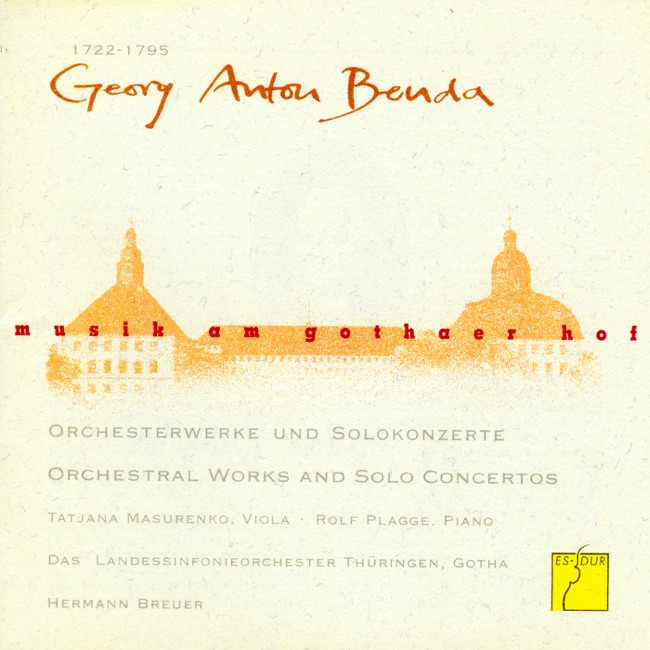
Georg Anton Benda
Symphony No. 1 in D major
Released Album
Recent Album
Works Info
Composer:Georg Anton BendaGenre:SymphonyStyle:SymphonyAverage_duration:10:21Movement_count:3Movement ....Georg Anton Benda's Symphony No. 1 in D major is a four-movement work that was composed in the mid-18th century. The exact date of composition is not known, but it is believed to have been written around 1755. The symphony was premiered in the court of Duke Christian Ernst of Saxe-Coburg-Saalfeld, where Benda was employed as a court musician. The first movement of the symphony is marked Allegro and is in sonata form. It begins with a lively and energetic theme played by the strings, which is then developed and expanded upon throughout the movement. The second movement is marked Andante and is a slow, lyrical piece that features a beautiful melody played by the woodwinds. The third movement is a Minuet and Trio, which is a traditional dance form of the time. The Minuet is a stately and elegant dance, while the Trio is a more playful and lighthearted section. The final movement is marked Allegro and is a lively and energetic piece that brings the symphony to a rousing conclusion. One of the characteristics of Benda's Symphony No. 1 is its use of orchestration. Benda was known for his skill in writing for the orchestra, and this symphony is no exception. The work features a wide range of instruments, including strings, woodwinds, brass, and percussion. Benda also makes use of dynamic contrasts throughout the symphony, with sudden shifts from loud to soft and back again. Another characteristic of the symphony is its use of melody. Benda was a skilled melodist, and the symphony is full of memorable and catchy tunes. The themes are often developed and expanded upon throughout the movements, creating a sense of unity and coherence in the work. Overall, Georg Anton Benda's Symphony No. 1 in D major is a fine example of mid-18th century orchestral music. Its use of orchestration, melody, and form make it a work of great beauty and interest, and it remains a popular piece in the repertoire of classical music today.More....
Works Music
Released Music