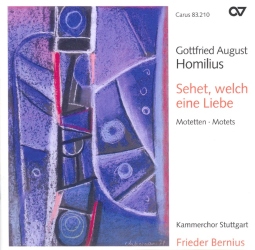
Gottfried August Homilius
Herr, lehre uns bedenken
Released Album
Recent Album
Works Info
Composer:Gottfried August HomiliusGenre:ChoralStyle:ChoralAverage_duration:4:24'Herr, lehre uns bedenken' is a sacred cantata composed by Gottfried August Homilius, a German composer and church musician of the late Baroque era. The cantata was composed in 1765 and premiered in the same year in Dresden, Germany. The cantata consists of three movements, each with its own distinct characteristics. The first movement is a choral fugue, which begins with a solemn and majestic introduction. The fugue is characterized by its intricate counterpoint and the use of imitative polyphony. The choral parts are sung in a homophonic style, with the voices moving together in harmony. The second movement is a duet for soprano and bass, accompanied by a string orchestra. The duet is characterized by its lyrical melody and the interplay between the two voices. The soprano sings a prayerful melody, while the bass responds with a more declamatory style. The orchestra provides a rich and supportive accompaniment, with the strings playing a prominent role. The final movement is a chorale, which is sung by the full choir. The chorale is characterized by its simplicity and its use of homophonic texture. The melody is sung in unison by the choir, with the harmonies provided by the organ. The chorale is a prayerful and reflective conclusion to the cantata. Overall, 'Herr, lehre uns bedenken' is a beautiful and expressive work, which showcases Homilius' skill as a composer and his deep understanding of sacred music. The cantata is characterized by its intricate counterpoint, its rich harmonies, and its prayerful and reflective tone. It remains a beloved work in the repertoire of sacred music to this day.More....
Works Music