Max Reger
Der Erlkönig (after Schubert, D. 328)
Released Album
Recent Album
Featured Album
Works Info
Composer:Max RegerGenre:VocalStyle:Vocal MusicCompose Date:1914Average_duration:4:00Max Reger's "Der Erlkönig (after Schubert, D. 328)" is a composition for solo piano that was composed in 1912. The piece is based on Franz Schubert's famous lied "Erlkönig," which tells the story of a father and his son riding through a dark forest, pursued by the Erlking, a supernatural being who tries to lure the boy away. Reger's composition is a virtuosic and dramatic interpretation of Schubert's original, with a number of added flourishes and embellishments. The piece is divided into three movements, each of which corresponds to a different section of Schubert's original song. The first movement is marked "Sehr rasch" (very fast) and is based on the opening section of Schubert's lied, in which the father and son are riding through the forest. Reger's interpretation is frenetic and intense, with rapid arpeggios and cascading runs that evoke the sense of urgency and danger in the original text. The second movement is marked "Langsam" (slowly) and corresponds to the middle section of Schubert's song, in which the Erlking tries to seduce the boy with promises of wealth and power. Reger's interpretation is more lyrical and introspective than the first movement, with a haunting melody that is played in the upper register of the piano. The movement builds to a climax with a series of thunderous chords that represent the boy's struggle against the Erlking's influence. The final movement is marked "Sehr schnell" (very fast) and corresponds to the final section of Schubert's song, in which the father and son escape from the forest and the Erlking's grasp. Reger's interpretation is triumphant and virtuosic, with a series of rapid-fire runs and arpeggios that represent the exhilaration of the escape. The movement ends with a series of thunderous chords that bring the piece to a dramatic close. Overall, Reger's "Der Erlkönig" is a powerful and dramatic interpretation of Schubert's original song, with a number of added flourishes and embellishments that showcase the virtuosity of the pianist. The piece premiered in 1912 and has since become a staple of the piano repertoire.More....
Works Music
Released Music
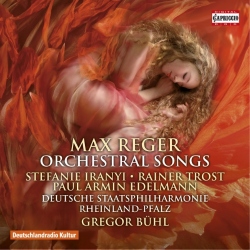
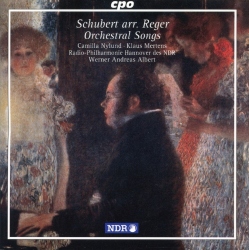
Featured Music