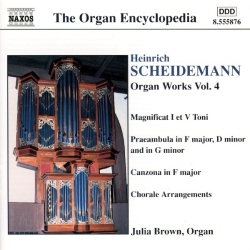
Heinrich Scheidemann
O Gott wir danken deiner Güt
Released Album
Recent Album

Works Info
Composer:Heinrich ScheidemannGenre:KeyboardStyle:KeyboardAverage_duration:2:52Heinrich Scheidemann was a German composer and organist who lived from 1595 to 1663. He was a prominent figure in the North German organ school, which was a group of composers who wrote for the organ in the 17th century. One of Scheidemann's most famous works is "O Gott wir danken deiner Güt," which is a chorale fantasia for organ. The composition of "O Gott wir danken deiner Güt" is not precisely known, but it is believed to have been written in the early 17th century. The piece is based on a Lutheran hymn of the same name, which was written by Martin Rinckart in the 17th century. The hymn is a thanksgiving song, and Scheidemann's composition reflects this theme. The premiere of "O Gott wir danken deiner Güt" is also not known, but it was likely performed in a church or cathedral in Germany. The piece is divided into several movements, which are typical of the chorale fantasia genre. The first movement is an introduction, which sets the tone for the piece. The second movement is a chorale setting, which features the melody of the hymn. The third movement is a fugue, which is a complex contrapuntal form. The fourth movement is a variation on the chorale melody, and the fifth movement is a coda, which brings the piece to a close. The characteristics of "O Gott wir danken deiner Güt" reflect the style of the North German organ school. The piece is written for the organ, which was a popular instrument in Germany at the time. The composition features complex counterpoint, which is a hallmark of the North German organ school. The piece also features a variety of textures, from the simple chorale setting to the complex fugue. The piece is also notable for its use of ornamentation, which was a common feature of Baroque music. Overall, "O Gott wir danken deiner Güt" is a significant work in the North German organ school and is an excellent example of the chorale fantasia genre. The piece reflects the religious and musical traditions of Germany in the 17th century and is still performed and studied today.More....