


Jose Maria Usandizaga
Released Album
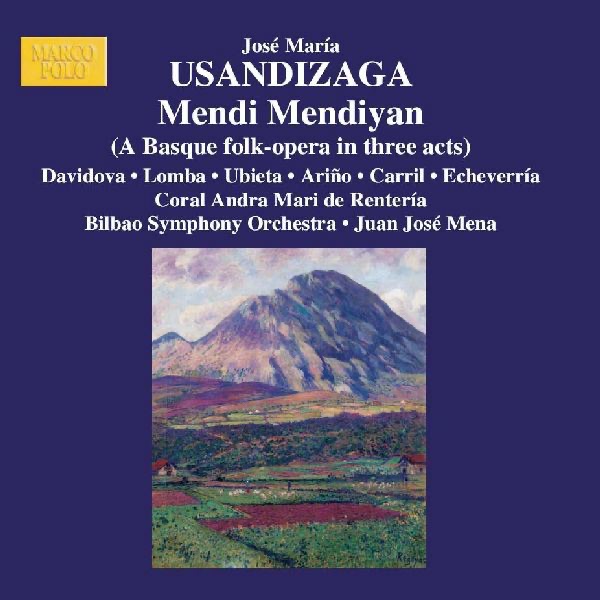
Opera
-
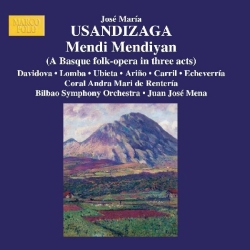
 November 25, 2008
 -
 February 22, 2005
 -
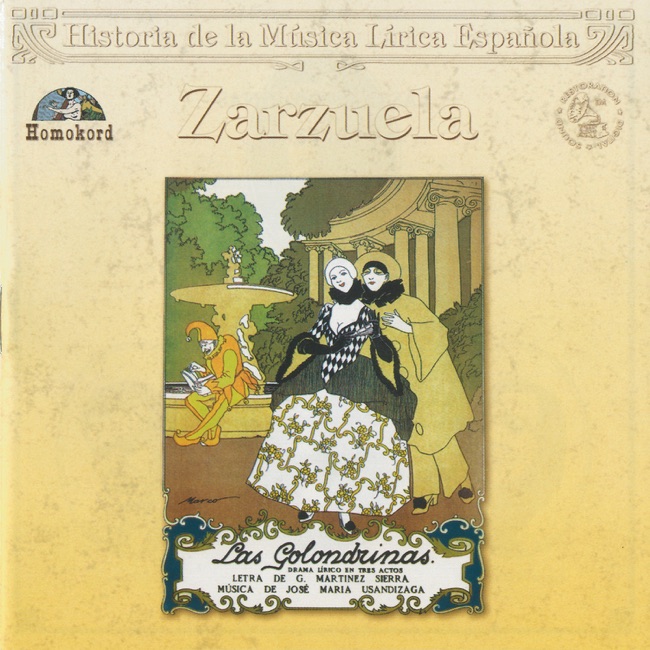 May 15, 1999
Orchestral
-
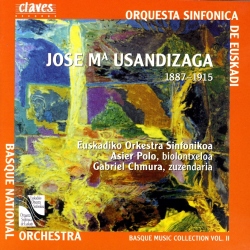
 February 25, 2003
Artist Info
Role:ComposerBirth:1887Death:1915Period:ModernGenre:OperaOrchestralJose Maria Usandizaga was a Spanish composer who was born on March 31, 1887, in San Sebastian, Spain. He was the youngest of six children and grew up in a family that was passionate about music. His father, Juan Usandizaga, was a well-known composer and conductor, and his mother, Maria de la Concepcion, was a pianist and singer. Usandizaga began his musical education at a young age, studying piano and violin with his mother. He showed great talent and was soon enrolled in the San Sebastian Conservatory, where he studied composition with Juan Bautista Etxeberria. He also studied piano with Joaquin Larregla and harmony with Jose Maria Olaizola. In 1905, Usandizaga moved to Madrid to continue his studies at the Royal Conservatory of Music. There, he studied composition with Conrado del Campo and Joaquin Rodrigo, and piano with Jose Tragó. He also attended the Schola Cantorum in Paris, where he studied with Vincent d'Indy and Albert Roussel. Usandizaga's early works were heavily influenced by the Basque folk music of his homeland. He was particularly interested in the traditional Basque dances, such as the zortziko and the fandango, and incorporated these rhythms and melodies into his compositions. His first major work, the Basque Rhapsody for orchestra, was premiered in 1911 and was well-received by audiences and critics alike. In 1912, Usandizaga returned to San Sebastian, where he became the conductor of the Orfeón Donostiarra, a renowned choir that specialized in Basque music. He also taught at the San Sebastian Conservatory and continued to compose. His works from this period include the Basque Dances for piano, the String Quartet, and the Symphony in F minor. Usandizaga's music was characterized by its lyricism, its use of folk melodies and rhythms, and its harmonic richness. He was also known for his skillful orchestration and his ability to create vivid musical images. His music was often compared to that of his contemporaries, such as Manuel de Falla and Joaquin Rodrigo, and he was considered one of the leading composers of his generation. In 1915, Usandizaga was diagnosed with tuberculosis, which forced him to take a break from his musical activities. He spent several years in sanatoriums in Switzerland and France, where he continued to compose. His works from this period include the Piano Trio, the String Quintet, and the song cycle, "Six Basque Songs." Usandizaga returned to San Sebastian in 1920, but his health continued to deteriorate. He died on October 31, 1915, at the age of 28. His premature death was a great loss to the world of music, and his works were largely forgotten for many years. In recent years, however, there has been a renewed interest in Usandizaga's music. His works have been rediscovered and performed by orchestras and ensembles around the world, and he is now recognized as one of the most important Spanish composers of the early 20th century. Some of Usandizaga's most famous works include the Basque Rhapsody for orchestra, the String Quartet, the Symphony in F minor, and the song cycle, "Six Basque Songs." His music is characterized by its lyricism, its use of folk melodies and rhythms, and its harmonic richness. He was also known for his skillful orchestration and his ability to create vivid musical images. Usandizaga's legacy lives on through his music, which continues to inspire and delight audiences around the world.More....
Recent Artist Music
3
6:22
Copyright Ⓒ 2013 Davinci Finger. All rights reseved
Service Terms & Policy