


Karl Höller
Released Album
Chamber
-
-
 December 13, 2016
 -
-
 February 18, 1997
Keyboard
-
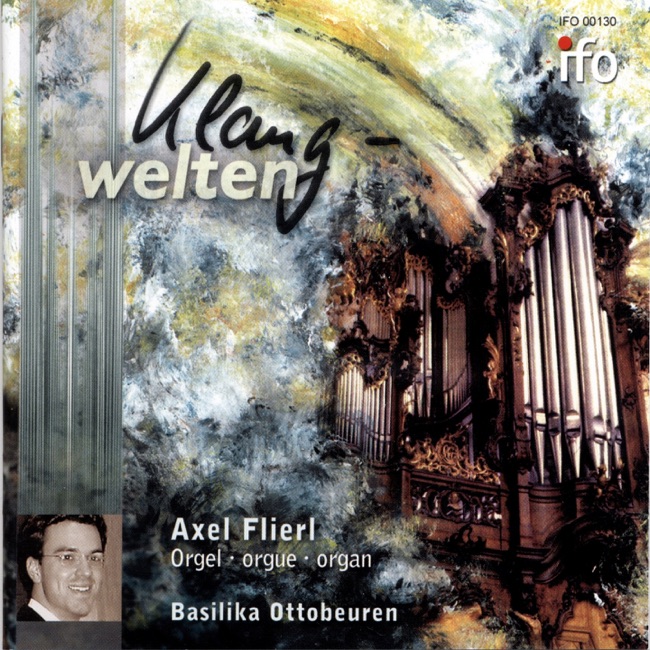 September 4, 2003
 -
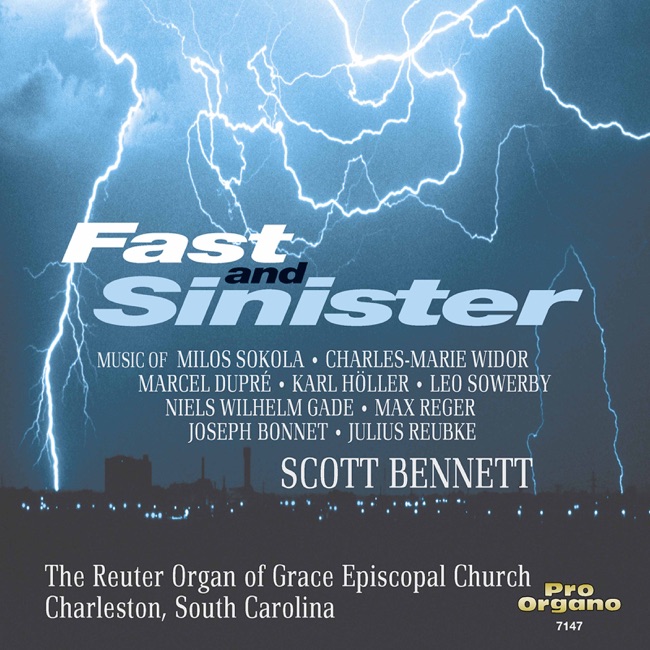 May 27, 2003
Orchestral
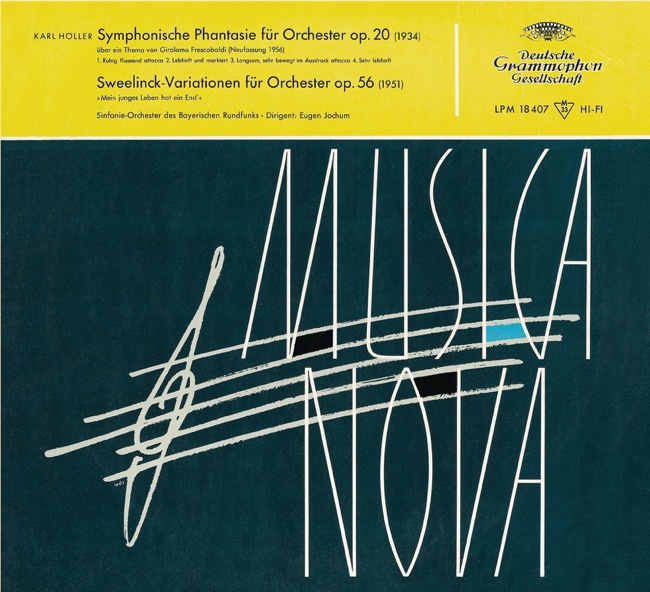
Artist Info
Role:Composer ConductorBirth:July 25, 1907Death:April 14, 1987Period:ModernGenre:ChamberConcertoKeyboardKarl Höller was a German composer and music educator who was born on July 25, 1907, in Bamberg, Germany. He was the son of a music teacher and grew up in a musical family. His father, Karl Höller Sr., was a well-known music educator and conductor in Bamberg, and his mother, Maria, was a pianist. From a young age, Karl showed a great interest in music and began studying piano and violin with his father. In 1925, Karl Höller enrolled at the Hochschule für Musik in Munich, where he studied composition with Joseph Haas and conducting with Felix Mottl. He also studied piano with Walter Gieseking and violin with Georg Kulenkampff. During his time at the Hochschule, Höller became interested in the music of Arnold Schoenberg and the Second Viennese School, which had a significant influence on his own compositions. After completing his studies in Munich, Höller worked as a freelance composer and conductor in Berlin and Munich. In 1933, he was appointed as a professor of composition at the Hochschule für Musik in Munich, where he taught until 1972. During his tenure at the Hochschule, Höller was a highly respected teacher and mentor to many young composers, including Hans Werner Henze and Wilhelm Killmayer. Höller's compositions are characterized by their clarity of form, harmonic richness, and expressive intensity. His early works, such as the String Quartet No. 1 (1930) and the Piano Sonata No. 1 (1931), show the influence of Schoenberg and the Second Viennese School. However, Höller soon developed his own distinctive style, which combined elements of neoclassicism, serialism, and traditional tonality. One of Höller's most significant works is the Symphony No. 1 (1937), which was premiered by the Berlin Philharmonic under the direction of Wilhelm Furtwängler. The symphony is a powerful and dramatic work that reflects the political and social turmoil of the time. It features a large orchestra, including a battery of percussion instruments, and is characterized by its bold harmonies and rhythmic energy. During World War II, Höller served in the German army and was stationed in Italy. While there, he composed several works, including the String Quartet No. 2 (1943) and the Piano Sonata No. 2 (1944). These works show a more introspective and lyrical side of Höller's music, reflecting the difficult and uncertain times in which they were written. After the war, Höller returned to Munich and resumed his teaching and composing activities. He continued to write music in a variety of genres, including orchestral works, chamber music, and vocal music. One of his most popular works is the Concerto for Organ and Orchestra (1951), which was commissioned by the city of Nuremberg for the inauguration of a new organ in the St. Lorenz Church. The concerto is a virtuosic and colorful work that showcases the capabilities of the organ and the orchestra. In addition to his work as a composer and teacher, Höller was also active as a conductor and musicologist. He conducted many premieres of his own works and those of other composers, including the German premiere of Stravinsky's Symphony in Three Movements. He also wrote several books and articles on music theory and analysis, including a monograph on the music of Anton Webern. Höller received many honors and awards for his contributions to music, including the Bavarian Order of Merit and the Order of Merit of the Federal Republic of Germany.More....
Recent Artist Music
1
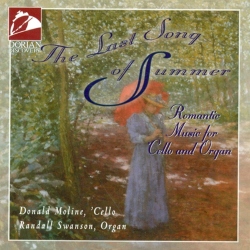
20:50
2
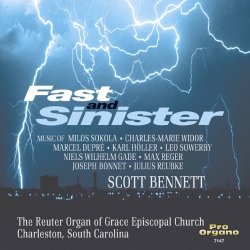
9:23
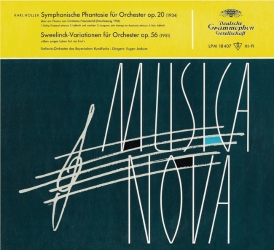
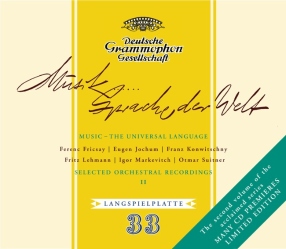
9
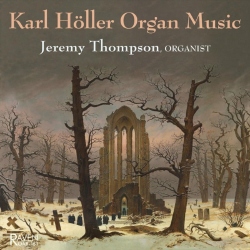
Karl Höller
Chorale-Passacaglia 'Die Sonn’ hat sich mit ihrem Glanz gewendet,' Op. 61
16:51
10
15:
Copyright Ⓒ 2013 Davinci Finger. All rights reseved
Service Terms & Policy