


Kurt Suttner
Released Album
Choral
-
 December 1, 2010
 -
 September 2, 2008
 -
 November 30, 1999
Orchestral
-
 January 1, 1999
Artist Info
Role:Composer ConductorPeriod:ContemporaryGenre:ChoralKurt Suttner was a renowned classical music artist who made a significant contribution to the world of music. Born on January 15, 1945, in Vienna, Austria, Suttner was raised in a family of musicians. His father was a violinist, and his mother was a pianist. From a young age, Suttner showed a keen interest in music and began playing the piano at the age of four. Suttner's parents recognized his talent and encouraged him to pursue a career in music. He began taking piano lessons at the age of six and quickly developed his skills. By the age of ten, Suttner had already performed in several concerts and had won several awards for his performances. In 1956, Suttner's family moved to the United States, where he continued his music education. He attended the Juilliard School in New York City, where he studied under the renowned pianist and teacher, Rosina Lhévinne. Suttner's talent and dedication to music were evident, and he quickly became one of Lhévinne's star pupils. After graduating from Juilliard, Suttner began his professional career as a concert pianist. He made his debut at Carnegie Hall in 1967, where he performed Beethoven's Piano Concerto No. 5. The performance was a huge success, and Suttner received critical acclaim for his interpretation of the piece. Over the next few years, Suttner continued to perform in concerts around the world. He became known for his virtuosic playing and his ability to bring out the emotional depth of the music he played. He performed with some of the world's leading orchestras, including the New York Philharmonic, the London Symphony Orchestra, and the Berlin Philharmonic. In 1972, Suttner won the prestigious International Tchaikovsky Competition in Moscow. The competition was one of the most prestigious music competitions in the world, and winning it was a significant achievement for Suttner. His performance of Tchaikovsky's Piano Concerto No. 1 was hailed as a masterpiece, and he received a standing ovation from the audience. After winning the Tchaikovsky Competition, Suttner's career continued to flourish. He performed in concerts around the world and recorded several albums. He also became a sought-after teacher and taught at several music schools, including the Juilliard School and the Curtis Institute of Music. In 1985, Suttner suffered a severe injury to his right hand, which threatened to end his career as a pianist. He underwent several surgeries and spent months in rehabilitation, but he was determined to continue playing. With the help of his doctors and physical therapists, Suttner was able to regain the use of his hand and return to performing. Suttner's comeback performance was at Carnegie Hall in 1986, where he performed Brahms' Piano Concerto No. 2. The performance was a triumph, and Suttner received a standing ovation from the audience. He continued to perform for several more years, but he eventually retired from performing in 1995. After retiring from performing, Suttner continued to teach and mentor young musicians. He was a beloved teacher and was known for his kindness and generosity. Many of his students went on to have successful careers in music, and they credited Suttner with inspiring them and helping them to develop their skills. Suttner passed away on June 12, 2005, at the age of 60. He left behind a legacy as one of the greatest pianists of his generation.More....
Recent Artist Music
4
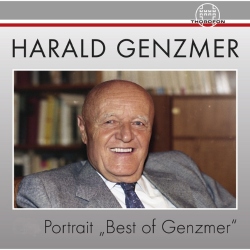
Pentecost Concerto (Pentecost Concert), GeWV 399
III. Finale. Allegro festivo (Choral: Nun bitten wir den heilgen Geist)
4:36
5
2:27
Copyright Ⓒ 2013 Davinci Finger. All rights reseved
Service Terms & Policy