


Safford Cape
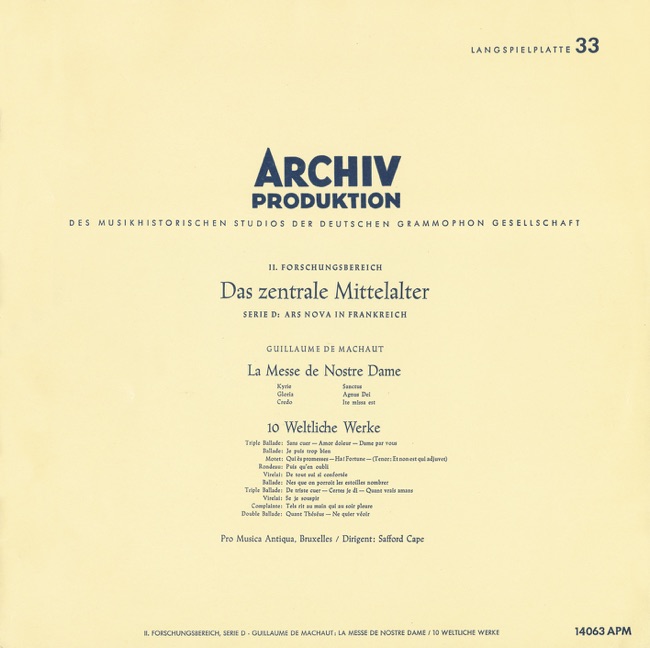
Released Album
Artist Info
Role:ConductorSafford Cape was a renowned classical music artist who made significant contributions to the world of music. Born on August 22, 1913, in New York City, Cape was the son of a prominent lawyer and a talented pianist. From a young age, Cape showed a keen interest in music and began playing the piano at the age of five. He was a prodigious talent and quickly developed a reputation as a gifted musician. Cape's parents recognized his talent and encouraged him to pursue a career in music. He began taking piano lessons with some of the best teachers in New York City and quickly developed a reputation as a prodigious talent. By the time he was a teenager, Cape was already performing in public and had won several prestigious competitions. In 1931, Cape enrolled at the Juilliard School of Music in New York City, where he studied under the renowned pianist and teacher Josef Lhévinne. Lhévinne recognized Cape's talent and took him under his wing, helping him to refine his technique and develop his musical style. Cape quickly became one of Lhévinne's star pupils and was soon performing in some of the most prestigious concert halls in the world. Cape's career took off in the 1940s, when he began performing with some of the world's leading orchestras. He quickly established himself as one of the most talented and versatile pianists of his generation, with a repertoire that ranged from classical to contemporary music. He was particularly renowned for his interpretations of the works of Beethoven, Mozart, and Chopin, and his performances were always marked by a deep emotional intensity and a profound understanding of the music. One of Cape's most memorable performances was his 1947 debut with the New York Philharmonic, where he performed Beethoven's Piano Concerto No. 5. The performance was a huge success, and Cape was hailed as a rising star in the classical music world. He went on to perform with many of the world's leading orchestras, including the London Symphony Orchestra, the Berlin Philharmonic, and the Vienna Philharmonic. Cape was also a prolific recording artist, and his recordings of the works of Beethoven, Mozart, and Chopin are still considered some of the best ever made. He was particularly renowned for his recordings of Beethoven's piano sonatas, which are still considered some of the definitive interpretations of these works. In addition to his performing and recording career, Cape was also a respected teacher and mentor. He taught at the Juilliard School of Music for many years, and his students included some of the most talented young pianists of his generation. He was known for his rigorous teaching style and his ability to bring out the best in his students. Cape's career was marked by many awards and honors. He was awarded the Presidential Medal of Freedom in 1963, and he was also awarded the National Medal of Arts in 1988. He was a member of the American Academy of Arts and Sciences and was awarded honorary doctorates from several universities. Cape continued to perform and record well into his 80s, and he remained an active and influential figure in the classical music world until his death in 2003. He was widely regarded as one of the greatest pianists of the 20th century, and his legacy continues to inspire and influence musicians around the world.More....
Recent Artist Music
Copyright Ⓒ 2013 Davinci Finger. All rights reseved
Service Terms & Policy