


Alun Hoddinott
Released Album
Orchestral
-
 November 8, 2011
 -
 January 12, 2010
 -
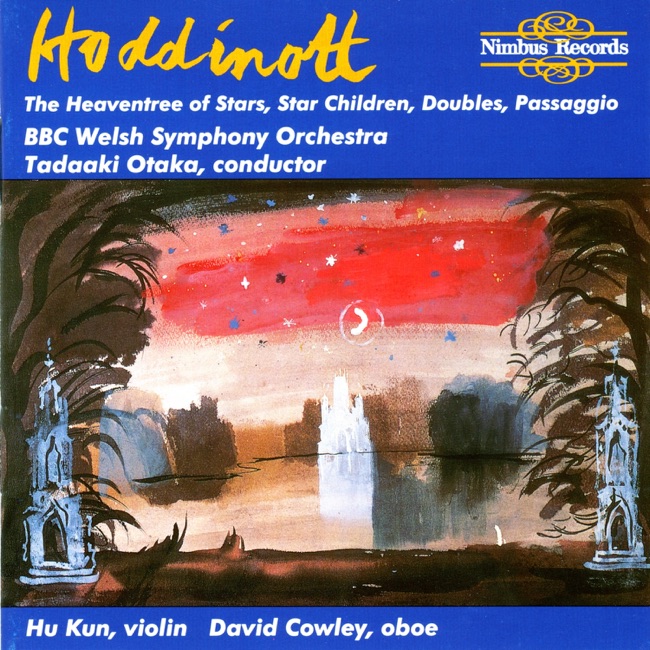 August 23, 2003
 -
Keyboard
-
 June 9, 2015
 -
-
 May 1, 2005
 -
 March 1, 1999
 -
 August 26, 1997
Chamber
-
 June 30, 2015
 -
 April 26, 2005
 -
 May 22, 2001
Artist Info
Role:Composer ConductorCountry: United KingdomBirth:August 11, 1929 in Bargoed, GlamorganshireDeath:March 12, 2008 in Cardiff, WalesPeriod:ContemporaryGenre:KeyboardOrchestralAlun Hoddinott was a Welsh composer who was born on August 11, 1929, in Bargoed, South Wales. He was the son of a coal miner and grew up in a working-class family. Despite his humble beginnings, Hoddinott showed an early interest in music and began taking piano lessons at the age of five. He later learned to play the violin and the organ. Hoddinott attended the University of Wales, Cardiff, where he studied music under the tutelage of Arwel Hughes. He later went on to study at the Royal Academy of Music in London, where he was a pupil of Lennox Berkeley. Hoddinott's early compositions were heavily influenced by the works of Benjamin Britten and Igor Stravinsky. Hoddinott's first major work was his Symphony No. 1, which he composed in 1953. The piece was well-received and helped establish Hoddinott as a rising star in the world of classical music. He went on to compose a number of other symphonies, including Symphony No. 2, which was commissioned by the BBC in 1956. In addition to his symphonies, Hoddinott composed a wide range of other works, including chamber music, choral music, and operas. One of his most famous works is his Concerto for Clarinet, which was composed in 1969. The piece has been performed by some of the world's leading clarinetists and is considered a masterpiece of the genre. Hoddinott was also a prolific composer of vocal music. He wrote a number of song cycles, including The Silver Hound, which was based on Welsh folk tales. He also composed a number of choral works, including his Missa Cambrensis, which was commissioned by the Welsh Arts Council in 1971. Throughout his career, Hoddinott was recognized for his contributions to the world of classical music. He was awarded the CBE in 1983 and was made a Fellow of the Royal Academy of Music in 1986. He was also awarded the Queen's Medal for Music in 2003. Hoddinott continued to compose music well into his later years. His final work, a setting of the Welsh poem "Y Lloer" (The Moon), was completed just weeks before his death in March 2008. In addition to his work as a composer, Hoddinott was also a respected music educator. He taught at the University of Wales, Cardiff, for many years and was instrumental in the establishment of the Cardiff Festival of Twentieth Century Music. Hoddinott's music is characterized by its complexity and its use of dissonance. He was known for his ability to blend traditional Welsh melodies with modernist techniques, creating a unique and distinctive sound. His work has been performed by some of the world's leading orchestras and has been recorded by a number of prominent classical music labels. In conclusion, Alun Hoddinott was a Welsh composer who made significant contributions to the world of classical music. His work was characterized by its complexity and its use of dissonance, and he was known for his ability to blend traditional Welsh melodies with modernist techniques. Hoddinott's legacy continues to be felt in the world of classical music, and his work remains an important part of the canon of 20th-century music.More....
Recent Artist Music
3
14:40
8
2:32
Copyright Ⓒ 2013 Davinci Finger. All rights reseved
Service Terms & Policy