


John Stanley
Released Album
Chamber
-
 August 13, 2018
 -
 September 28, 2016
 -
 September 9, 2014
 -
 January 1, 2012
 -
 October 26, 2010
Keyboard
-
 February 9, 2024
 -
-
 October 1, 2021
 -
 August 18, 2021
 -
-
 December 9, 2016
Concerto
-
 November 16, 2020
 -
 November 29, 2018
 -
 June 30, 2017
 -
 January 1, 2004
 -
 March 23, 1999
 -
Artist Info
Role:ComposerCountry: United KingdomBirth:January 17, 1712 in London, EnglandDeath:May 19, 1786 in London, EnglandPeriod:BaroqueGenre:ChamberConcertoKeyboardJohn Stanley was a prominent English composer and organist of the Baroque era. He was born on January 17, 1712, in London, England, to John Stanley Sr. and Elizabeth Stanley. His father was a well-known musician and composer, and it is believed that he was the one who taught John Stanley Jr. how to play the organ and the harpsichord. John Stanley Jr. showed an early interest in music and began composing at a young age. He was a child prodigy and gave his first public performance at the age of seven. He was also a skilled organist and was appointed as the organist at All Hallows Church in London at the age of 17. In 1734, John Stanley Jr. became the organist at the Society of the Inner Temple in London, a position he held for the rest of his life. He was also appointed as the organist at St. Andrew's Church in Holborn in 1736, a position he held until his death. John Stanley Jr. was a prolific composer and wrote music in a variety of genres, including operas, oratorios, concertos, and chamber music. He was particularly known for his organ music, which was highly regarded during his lifetime and continues to be performed today. One of John Stanley Jr.'s most famous works is his Concerto for Strings in G major, Op. 2, No. 3. This piece is a prime example of his skill as a composer and his ability to write music that is both technically challenging and musically engaging. The concerto is composed of three movements, each of which showcases a different aspect of John Stanley Jr.'s compositional style. Another notable work by John Stanley Jr. is his Organ Concerto in B flat major, Op. 10, No. 2. This piece is a testament to his skill as an organist and his ability to write music that is both virtuosic and expressive. The concerto is composed of three movements, each of which features a different solo instrument, including the oboe, the trumpet, and the violin. John Stanley Jr. was also known for his chamber music, particularly his trio sonatas. One of his most famous trio sonatas is his Trio Sonata in D minor, Op. 2, No. 1. This piece is a prime example of his ability to write music that is both technically challenging and musically engaging. The sonata is composed of four movements, each of which showcases a different aspect of John Stanley Jr.'s compositional style. In addition to his work as a composer and organist, John Stanley Jr. was also a respected music theorist. He wrote several treatises on music theory, including his An Introduction to the Theory of Music, which was published in 1743. John Stanley Jr. died on May 19, 1786, in London, England, at the age of 74. He was buried in the churchyard of St. Andrew's Church in Holborn, where he had served as the organist for over 50 years. In conclusion, John Stanley Jr. was a highly skilled composer and organist who made significant contributions to the music of the Baroque era. His music continues to be performed and enjoyed today, and his legacy as a composer and musician lives on.More....
Recent Artist Music
4
Sonata for flute & organ No. 4 in A minor
Sonata No. 4 in A minor for transverse flute & organ
9:21
8
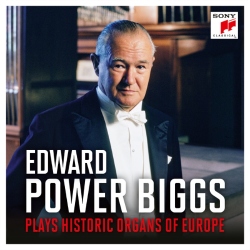
2:48
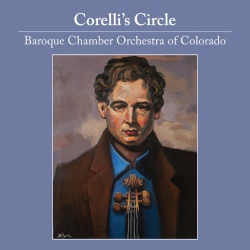
15
5:11
Related Artists
Copyright Ⓒ 2013 Davinci Finger. All rights reseved
Service Terms & Policy