


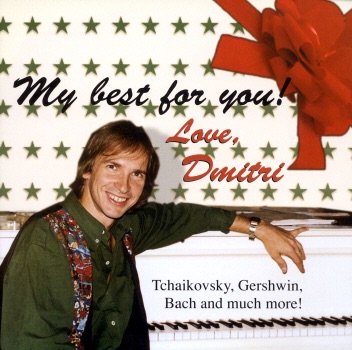
Dmitri
Released Album
Chamber
Keyboard
-
 May 1, 2001
Artist Info
Role:ComposerGenre:KeyboardSymphonyDmitri Shostakovich was a Russian composer and pianist who is widely regarded as one of the most important and influential composers of the 20th century. Born on September 25, 1906, in St. Petersburg, Russia, Shostakovich showed an early aptitude for music and began studying piano at the age of nine. He went on to study composition at the Petrograd Conservatory, where he was mentored by the renowned composer and teacher Nikolai Rimsky-Korsakov. Shostakovich's early works were heavily influenced by the music of his Russian predecessors, including Tchaikovsky and Rachmaninoff. However, he quickly developed his own unique style, characterized by its emotional intensity, dark humor, and biting satire. His music often reflected the political and social turmoil of his time, particularly the repressive regime of Joseph Stalin. One of Shostakovich's earliest successes came in 1926 with the premiere of his First Symphony, which was well-received by audiences and critics alike. He followed this with a series of works that cemented his reputation as one of the most promising young composers of his generation, including the opera The Nose (1930) and the ballet The Bolt (1931). However, Shostakovich's career was soon to be overshadowed by the political climate of the Soviet Union. In 1936, Stalin attended a performance of Shostakovich's opera Lady Macbeth of Mtsensk, which he found offensive and decadent. The next day, an article appeared in the state-run newspaper Pravda denouncing the opera and its composer. This marked the beginning of a period of intense scrutiny and persecution for Shostakovich, who was forced to toe the party line and produce works that were more in line with Soviet ideology. Despite this pressure, Shostakovich continued to produce some of his most powerful and enduring works during this period, including his Fifth Symphony (1937) and his String Quartet No. 8 (1960). These works, which often contained hidden messages of dissent and criticism, were celebrated by audiences and critics around the world. Shostakovich's international reputation continued to grow throughout the 1950s and 1960s, as he became a frequent guest conductor and lecturer in Europe and the United States. He was awarded numerous honors and awards during this time, including the Lenin Prize (1958) and the Order of Lenin (1966). Shostakovich's later years were marked by declining health and a growing sense of disillusionment with the Soviet regime. He died on August 9, 1975, at the age of 68, leaving behind a legacy of powerful and emotionally charged music that continues to inspire and move audiences around the world.More....
Recent Artist Music
Copyright Ⓒ 2013 Davinci Finger. All rights reseved
Service Terms & Policy