


Giovanni Antonio Pandolfi
Released Album
Chamber
-
 May 5, 2023
 -
 April 16, 2021
 -
 October 9, 2020
 -

-
 September 23, 2013
 -
 May 1, 2011
Artist Info
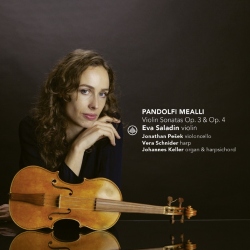
Role:ComposerGiovanni Antonio Pandolfi was an Italian composer and violinist who lived during the Baroque period. He was born in 1620 in the city of Venice, which was a hub of musical activity during his time. Pandolfi grew up in a family of musicians, and his father was a well-known violinist and composer. It is likely that he received his early musical training from his father, and he quickly showed a talent for the violin. Pandolfi's career as a musician began in earnest when he was appointed as a violinist in the court of the Duke of Mantua. He remained in this position for several years, during which time he honed his skills as a performer and composer. In 1645, he moved to Florence, where he became a member of the court orchestra. It was during this time that he began to gain recognition as a composer, and his works were performed in various venues throughout Italy. One of Pandolfi's most notable works is his Sonata for Violin and Continuo in A Major, which was published in 1660. This piece is a prime example of the Baroque sonata, which typically consists of several movements that showcase the virtuosity of the solo instrument. The A Major Sonata is a particularly challenging work for the violinist, as it requires a high level of technical skill and precision. Despite its difficulty, the piece has remained popular among violinists and is still performed today. Another of Pandolfi's notable works is his Sonata for Violin and Continuo in G Minor, which was also published in 1660. This piece is notable for its use of the chaconne, a musical form that was popular during the Baroque period. The chaconne is characterized by a repeating bass line, which provides a foundation for the solo instrument to improvise and embellish upon. Pandolfi's G Minor Sonata is a masterful example of this form, and it has been praised for its beauty and complexity. In addition to his sonatas for violin and continuo, Pandolfi also composed several works for larger ensembles. One of his most notable pieces in this genre is his Concerto for Four Violins and Continuo in D Major, which was published in 1660. This piece is a prime example of the concerto grosso, a form that was popular during the Baroque period. In a concerto grosso, a small group of soloists (in this case, four violins) is accompanied by a larger ensemble (in this case, the continuo). Pandolfi's D Major Concerto is a lively and energetic work that showcases the virtuosity of the soloists. Despite his success as a composer and performer, Pandolfi's life was not without its challenges. In 1665, he was accused of embezzlement and was forced to flee Florence to avoid prosecution. He spent the rest of his life in relative obscurity, and it is unclear what became of him after he left Florence. However, his legacy as a composer and violinist has endured, and his works continue to be performed and studied by musicians around the world. In conclusion, Giovanni Antonio Pandolfi was a talented composer and violinist who lived during the Baroque period. He was born into a family of musicians and received his early training from his father. He went on to have a successful career as a performer and composer, and his works continue to be admired for their beauty and complexity. Despite the challenges he faced later in life, Pandolfi's legacy as a musician has endured, and he remains an important figure in the history of classical music.More....
Recent Artist Music
3
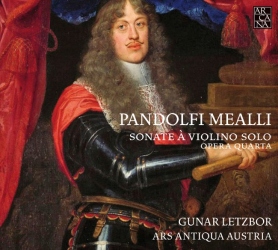
Passacaglia for 2 violins & continuo ("Il Marcquetta")
Il Marcquetta, passacaglio a 2 (from Sonate, vioe balletti)
7:12
5

Sonata No. 4, for violin & ensemble "La Biancuccia"
Sonata Quarta. La Biancuccia Al multo illustre Signore Gio. jacomo Biancucci, muio Signore singularissimo
7:42

7
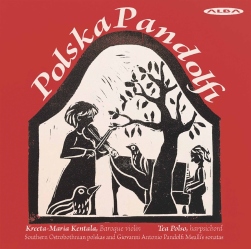
Sonata No. 6, for violin & ensemble "La Vinciolina"
Sonata A Violino Solo Opera: IV. La Vinciolina
7:1



Copyright Ⓒ 2013 Davinci Finger. All rights reseved
Service Terms & Policy