


Joseph Rosenstock
Released Album
Opera
-
 September 1, 2014
Orchestral
-
 September 1, 2014
Artist Info
Role:ConductorJoseph Rosenstock was a renowned classical music artist who made significant contributions to the world of music as a conductor, pianist, and composer. He was born on December 28, 1882, in Krakow, Poland, to a family of musicians. His father, Samuel Rosenstock, was a violinist, and his mother, Regina Rosenstock, was a pianist. Joseph showed an early interest in music and began playing the piano at the age of four. At the age of 12, Joseph moved with his family to Vienna, Austria, where he continued his music education. He studied piano with Theodor Leschetizky, a renowned pianist and teacher, and composition with Robert Fuchs. He also attended the Vienna Conservatory, where he studied conducting with Franz Schalk. In 1903, Joseph made his debut as a pianist in Vienna, performing Beethoven's Piano Concerto No. 4 with the Vienna Philharmonic Orchestra. The performance was a great success, and Joseph was praised for his virtuosity and musicality. He continued to perform as a pianist throughout his career, but his true passion was conducting. In 1907, Joseph was appointed as the conductor of the Vienna Volksoper, a position he held for four years. During his tenure, he conducted a wide range of operas and operettas, including works by Mozart, Verdi, and Johann Strauss II. He also conducted the world premiere of Franz Lehár's operetta "The Merry Widow" in 1905, which became a huge success and is still performed today. In 1911, Joseph was appointed as the conductor of the Berlin State Opera, one of the most prestigious opera houses in Europe. He held this position for six years and conducted many important premieres, including Richard Strauss's "Der Rosenkavalier" and Arnold Schoenberg's "Erwartung." He also conducted the Berlin premiere of Gustav Mahler's Symphony No. 8, which was a huge success and cemented his reputation as a leading conductor. In 1917, Joseph was appointed as the conductor of the New York Philharmonic, one of the oldest and most prestigious orchestras in the United States. He held this position for five years and conducted many important premieres, including works by Stravinsky, Prokofiev, and Bartók. He also conducted the American premiere of Mahler's Symphony No. 9, which was a huge success and helped to establish Mahler's reputation in the United States. In 1922, Joseph was appointed as the conductor of the Vienna State Opera, a position he held for four years. During his tenure, he conducted many important premieres, including Alban Berg's "Wozzeck" and Richard Strauss's "Intermezzo." He also conducted the Vienna premiere of Mahler's Symphony No. 10, which was a huge success and helped to establish Mahler's reputation in Austria. In 1926, Joseph was appointed as the conductor of the Metropolitan Opera in New York, one of the most prestigious opera houses in the world. He held this position for six years and conducted many important premieres, including works by Puccini, Strauss, and Berg. He also conducted the American premiere of Schoenberg's "Moses und Aron," which was a huge success and helped to establish Schoenberg's reputation in the United States. In addition to his work as a conductor, Joseph was also a prolific composer. He wrote many works for orchestra, including symphonies, concertos, and tone poems. He also wrote many works for chamber ensembles and solo instruments.More....
Recent Artist Music
1
Duke Bluebeard's Castle
Prologue - Opening - First Door. The Torture Chamber - Second Door. The Armoury - Third Door. The Treasury
26:25
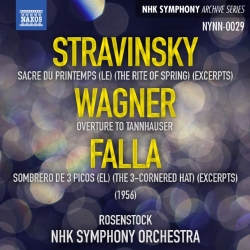
Copyright Ⓒ 2013 Davinci Finger. All rights reseved
Service Terms & Policy