


Matthew Locke/ Robert Smith
Released Album
Chamber
-
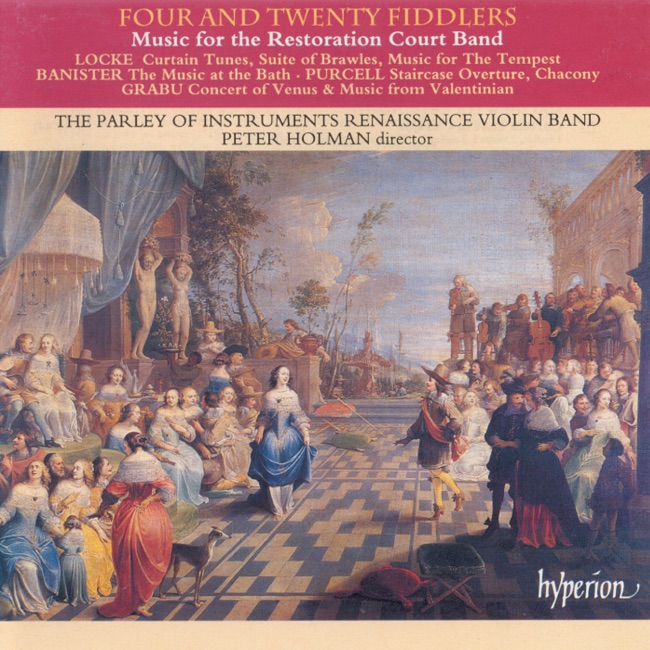 December 28, 1993
Artist Info
Role:ComposerBirth:ca. 1648Death:1675Period:BaroqueGenre:ChamberMatthew Locke was a prominent English composer of the Baroque era, born in Exeter in 1621. He was the son of a Puritan clergyman, and his family moved to London when he was a child. Locke showed an early aptitude for music, and he was sent to study with the organist and composer Christopher Gibbons, son of the famous composer Orlando Gibbons. Locke's early career was spent as a performer, playing the viola da gamba in various ensembles. He was a member of the King's Musick, the group of musicians who performed for the royal court, and he also played in the orchestra of the Duke's Company, one of the two major theatrical companies of the time. It was during this period that Locke began to compose music, primarily for the stage. Locke's first major success as a composer came in 1657, with the production of the play "The Siege of Rhodes" by Sir William Davenant. Locke wrote the music for the play, which was the first English opera. The work was a great success, and it established Locke as a leading composer for the stage. Over the next few years, Locke continued to compose music for the theater, including several more operas and a number of incidental music pieces for plays. He also wrote music for the church, including anthems and hymns. In 1661, he was appointed composer in ordinary to the king, a position he held until his death. One of Locke's most famous works is his "Consort of Four Parts," a collection of instrumental music for violins, viols, and other instruments. The work was published in 1660 and was highly influential in the development of English chamber music. Locke's music is characterized by its lively rhythms, inventive harmonies, and expressive melodies. Locke's music was also notable for its use of ground bass, a technique in which a repeating bass line is used as the foundation for a piece of music. This technique was popular in the Baroque era and was used by many composers, including Henry Purcell and Johann Sebastian Bach. Locke's later years were marked by illness and financial difficulties. He died in 1677 at the age of 56, leaving behind a legacy of innovative and influential music. Robert Smith was a Scottish composer and musician who lived in the late 18th and early 19th centuries. He was born in 1757 in the town of Dalkeith, near Edinburgh. Smith showed an early talent for music, and he was sent to study with the composer William Shield in London. Smith's early career was spent as a performer, playing the violin and viola in various orchestras and ensembles. He also composed music, primarily for the theater. In 1786, he was appointed composer to the Theatre Royal in Edinburgh, a position he held for several years. Smith's most famous work is his "Scots Musical Museum," a collection of Scottish folk songs that he arranged and published in six volumes between 1787 and 1803. The collection was a major contribution to the preservation and popularization of Scottish folk music, and it remains an important resource for musicians and scholars today. In addition to his work on the "Scots Musical Museum," Smith composed a number of other works, including operas, instrumental music, and church music. He was also a respected music teacher, and he taught many students in Edinburgh and London. Smith's music is characterized by its simple, lyrical melodies and its use of Scottish folk music elements.More....
Recent Artist Music
4
5:35
5
1:19
6
5:15
Copyright Ⓒ 2013 Davinci Finger. All rights reseved
Service Terms & Policy