


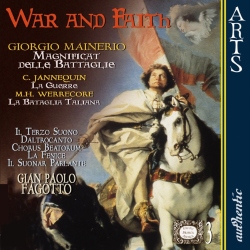
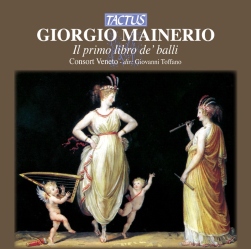
Giorgio Mainerio
Released Album
Chamber
-
 October 1, 2012
 -
-
 January 1, 2000
 -
 August 26, 1986
Artist Info
Role:ComposerCountry: ItalyBirth:ca. 1535 in Parma, ItalyDeath:May, 1582 in AquileiraPeriod:RenaissanceGenre:ChamberGiorgio Mainerio was a prominent Italian composer of the Renaissance era, known for his contributions to the development of instrumental music. He was born in Udine, Italy, in 1530, and little is known about his early life and musical training. However, it is believed that he received his education in music from the local cathedral in Udine, where he served as a choirboy. Mainerio's career as a composer began in the mid-16th century, when he was appointed as the organist at the Cathedral of Aquileia. During this time, he also served as a music teacher and composer for the noble families of the region, including the Gonzaga family of Mantua. It was during his time in Mantua that Mainerio began to develop his unique style of instrumental music, which combined elements of the traditional Italian dance music with the more complex polyphonic textures of the Renaissance. One of Mainerio's most significant contributions to the development of instrumental music was his publication of the "Il Primo Libro de Balli," or "The First Book of Dances," in 1578. This collection of dances included a variety of popular Italian dance forms, such as the saltarello, piva, and galliard, as well as more complex instrumental pieces, such as the canzon and the ricercar. The "Il Primo Libro de Balli" was widely popular throughout Italy and Europe, and it helped to establish Mainerio as one of the leading composers of his time. In addition to his work as a composer, Mainerio was also a skilled performer on a variety of instruments, including the organ, harpsichord, and lute. He was known for his virtuosic improvisations and his ability to adapt his playing style to suit the needs of different musical genres and contexts. Mainerio's compositions were characterized by their lively rhythms, intricate counterpoint, and colorful harmonies. He often incorporated elements of folk music and popular dance forms into his works, giving them a distinctly Italian flavor. His music was also notable for its use of instrumental color and texture, with different instruments often playing contrasting roles in the same piece. Some of Mainerio's most famous works include the "Canzonetta tedesca," a lively dance in triple meter that features a prominent bass line and intricate melodic lines for the upper instruments; the "Gagliarda del Principe di Venosa," a complex dance in duple meter that features a virtuosic lute solo; and the "La Rotta," a fast-paced dance in triple meter that features a driving rhythm and intricate interplay between the different instruments. Mainerio's influence on the development of instrumental music in the Renaissance era was significant, and his works continue to be studied and performed by musicians and scholars today. His innovative use of popular dance forms and his skillful blending of different musical styles helped to pave the way for the development of the Baroque era, which saw a further expansion of instrumental music and the emergence of new forms and genres. Despite his significant contributions to the world of music, Mainerio's life and career remain shrouded in mystery. Little is known about his personal life or his musical training, and many of his works have been lost or destroyed over time. However, his legacy as a composer and performer continues to live on, and his works remain an important part of the musical canon of the Renaissance era.More....
Recent Artist Music
12
Work(s)
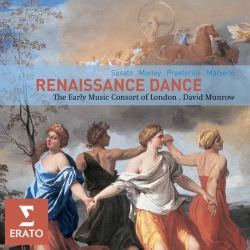
Five Dances: Pass'e mezzo della Paganina-Ballo Francese-La Lavandara,-L'Arboscello Ballo Furlano-La
6:37
Copyright Ⓒ 2013 Davinci Finger. All rights reseved
Service Terms & Policy