


Bertha Foerster-Lauterer
Released Album
Opera
-
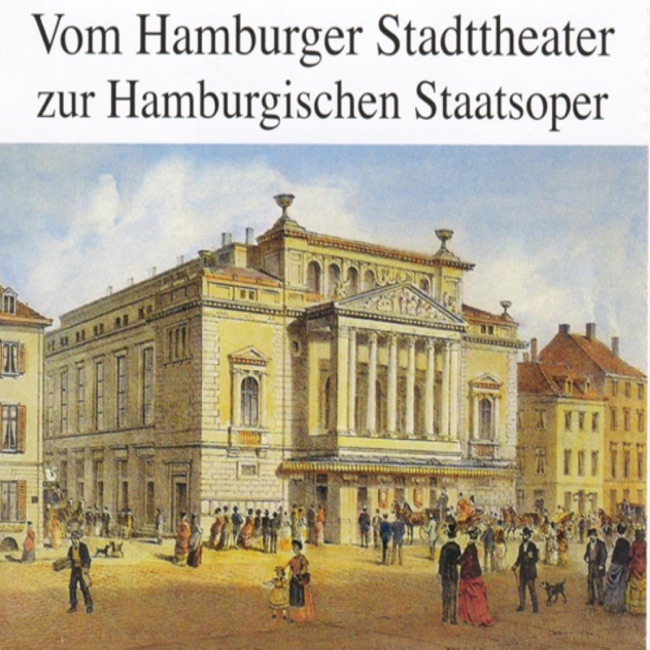 June 29, 2004
 -
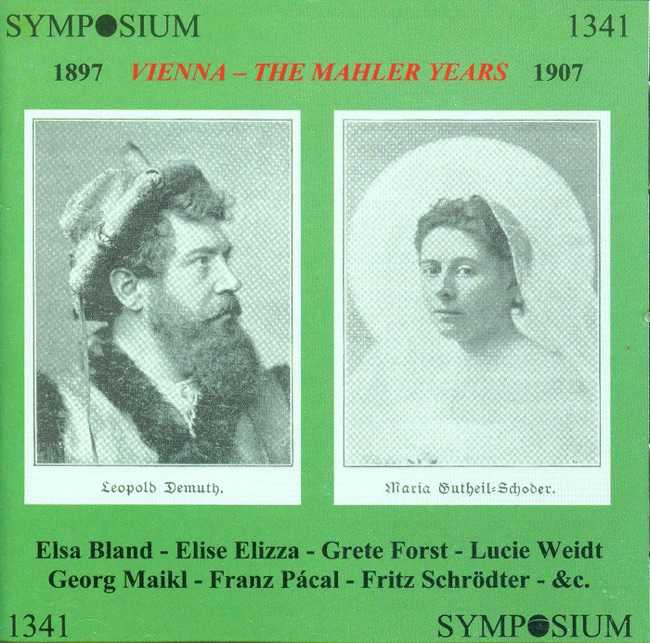 April 12, 2004
Artist Info
Role:PerformerBertha Foerster-Lauterer was a renowned classical music artist who made significant contributions to the world of music during her lifetime. She was born on December 22, 1879, in Vienna, Austria, to a family of musicians. Her father, Gustav Foerster, was a composer and conductor, while her mother, Helene Foerster, was a pianist. Bertha grew up in a musical environment and showed an early interest in music. Bertha received her first piano lessons from her mother and later studied with renowned pianists such as Theodor Leschetizky and Emil von Sauer. She also received training in composition and theory from her father. Bertha's talent and dedication to music were evident from an early age, and she made her debut as a pianist at the age of 14. In 1900, Bertha married the Austrian composer and conductor, Franz Lauterer. The couple had two children, and Bertha continued to pursue her career as a pianist while also supporting her husband's musical endeavors. In 1904, Bertha made her debut as a soloist with the Vienna Philharmonic Orchestra, performing Beethoven's Piano Concerto No. 4. The performance was a huge success, and Bertha received critical acclaim for her virtuosity and musicality. Over the next few years, Bertha established herself as one of the leading pianists of her time, performing extensively throughout Europe and the United States. She was known for her impeccable technique, musical sensitivity, and ability to bring out the nuances of the music she played. Bertha's repertoire was vast and included works by composers such as Bach, Mozart, Beethoven, Chopin, Liszt, and Brahms. In 1911, Bertha performed at the Salzburg Festival, where she played Mozart's Piano Concerto No. 23 in A major. The performance was a turning point in Bertha's career, as it brought her international recognition and established her as a leading interpreter of Mozart's music. Bertha continued to perform at the Salzburg Festival for many years, and her performances were always eagerly anticipated by audiences and critics alike. During World War I, Bertha and her family moved to Switzerland, where she continued to perform and teach music. In 1917, Bertha founded the Lauterer-Foerster Piano School in Zurich, which became one of the most prestigious music schools in Switzerland. Bertha's teaching was highly regarded, and many of her students went on to have successful careers as pianists and musicians. In 1920, Bertha and her family moved to the United States, where she continued to perform and teach music. She made her debut at Carnegie Hall in 1921, performing Beethoven's Piano Concerto No. 5. The performance was a huge success, and Bertha received rave reviews for her interpretation of the piece. Bertha continued to perform at Carnegie Hall and other major concert venues in the United States, and her performances were always well-received. In addition to her performing and teaching career, Bertha was also a prolific composer. She wrote music for piano, chamber ensembles, and orchestra, and her compositions were performed by many leading musicians of her time. Bertha's music was characterized by its lyrical melodies, harmonic richness, and emotional depth. Bertha received many honors and awards during her lifetime, including the Order of Merit from the Austrian government and the Gold Medal from the City of Vienna. She was also a member of the Vienna Academy of Music and the Royal Academy of Music in London.More....
Copyright Ⓒ 2013 Davinci Finger. All rights reseved
Service Terms & Policy