


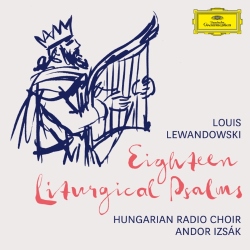
Louis Lewandowski
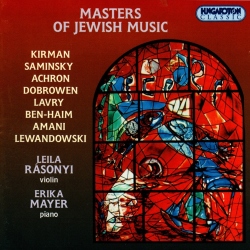
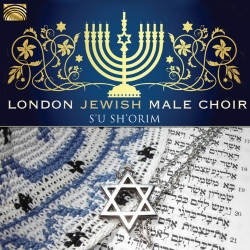
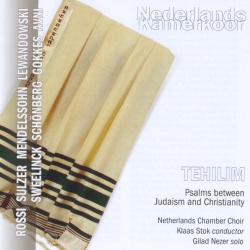
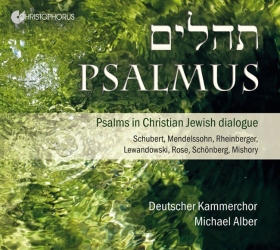
Released Album
Miscellaneous
Choral
-
 February 7, 2020
 -
 August 7, 2015
 -
 April 28, 2015
 -
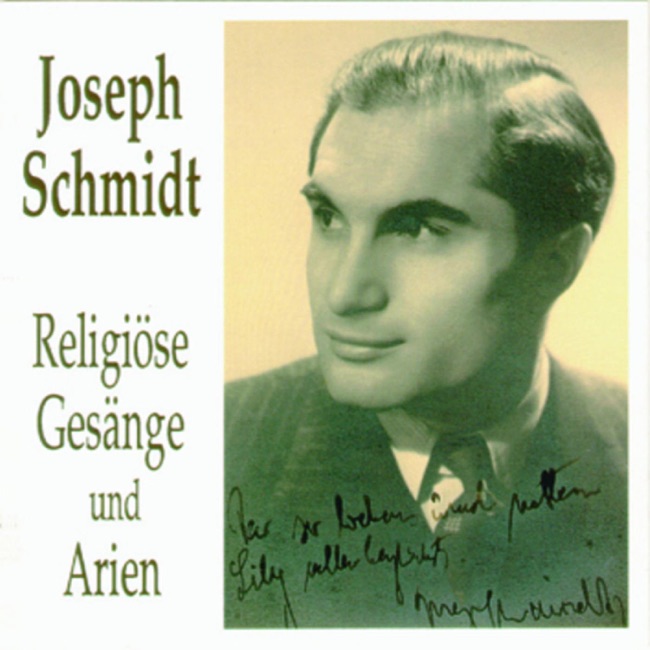 February 7, 1995
Artist Info
Role:ComposerBirth:April 3, 1821 in Września, Powiat wrzesiński, Wielkopolskie, PolandDeath:February 4, 1894 in Berlin, GermanyGenre:ChoralVocalLouis Lewandowski was a prominent composer of Jewish liturgical music in the 19th century. He was born on April 3, 1821, in Wreschen, a small town in the Grand Duchy of Posen, which is now part of Poland. His father, Samuel Lewandowski, was a cantor and a shochet (ritual slaughterer), and his mother, Esther, was a homemaker. Louis was the youngest of six children, and he showed an early interest in music. At the age of six, Louis began to study music with his father, who was his first teacher. He learned to sing and play the organ, and he also studied the violin and the piano. When he was ten years old, he became the assistant cantor in his father's synagogue, and he began to compose his own music. In 1838, Louis moved to Berlin to study music at the Royal Academy of Music. He studied composition with Carl Friedrich Rungenhagen and singing with Eduard Grell. He also studied the piano with Adolf Bernhard Marx and the organ with August Wilhelm Bach. While he was a student, he composed his first published work, a setting of Psalm 100. After completing his studies in 1844, Louis became the cantor at the Neue Synagoge in Berlin. He held this position for the rest of his life, and he became one of the most famous cantors in Europe. He was known for his beautiful voice, his virtuosic singing, and his innovative compositions. Louis composed over 400 works, most of which were for the synagogue. His music was characterized by its beauty, its complexity, and its emotional depth. He was influenced by the music of Felix Mendelssohn, who was a friend and mentor, and he also drew inspiration from the traditional Jewish melodies that he heard in the synagogue. One of Louis's most famous works is his setting of Psalm 150, which is known as the "Hallelujah" psalm. This piece is a tour de force of choral writing, with intricate harmonies, complex rhythms, and soaring melodies. It has become a staple of Jewish liturgical music, and it is still performed today. Another famous work by Louis is his setting of the Friday evening service, which is known as the "Friday Night Service." This piece is a masterpiece of liturgical music, with beautiful melodies, rich harmonies, and intricate counterpoint. It is considered one of the greatest works of Jewish music ever composed. Louis also composed a number of secular works, including songs, piano pieces, and chamber music. These works are less well-known than his liturgical music, but they are still highly regarded for their beauty and their craftsmanship. Louis was a devout Jew, and his music was deeply rooted in his faith. He believed that music was a way to connect with God, and he saw his compositions as a form of prayer. He once said, "Music is the language of the soul, and the soul speaks to God through music." Louis died on February 3, 1894, in Berlin. He was mourned by Jews and non-Jews alike, and his music continues to be performed and admired today. He was a pioneer of Jewish liturgical music, and his legacy lives on in the many composers who have been inspired by his work.More....
Recent Artist Music
7
3:53
10
Work(s)
Chöre zum Seelenfeier / Eingang: Enosh kechatzir yamav (Psalm 103) / Schluss: Lachen samach libbi (Psalm 16)
4:36

Copyright Ⓒ 2013 Davinci Finger. All rights reseved
Service Terms & Policy