


Carl Friedberg
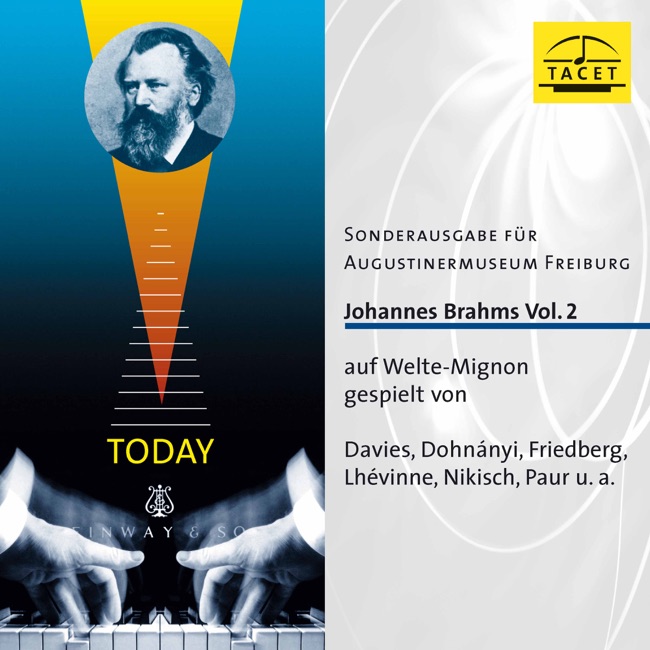
Artist Info
Role:ComposerPeriod:ClassicalRomanticGenre:KeyboardOrchestralCarl Friedberg was a renowned classical pianist and teacher who was born on October 28, 1872, in Berlin, Germany. He was the son of a wealthy Jewish family and began his musical training at a young age. His father, a successful businessman, recognized his son's talent and provided him with the best music education available. Friedberg studied with some of the most prominent pianists of his time, including Clara Schumann, who was a close friend of his family. He also studied with Ferruccio Busoni, who was a major influence on his playing style. Friedberg's playing was characterized by its clarity, precision, and technical brilliance. In 1892, Friedberg made his debut as a soloist with the Berlin Philharmonic Orchestra, performing Beethoven's Piano Concerto No. 4. The performance was a great success, and Friedberg quickly established himself as one of the leading pianists of his generation. Over the next few years, Friedberg toured extensively throughout Europe, performing in major cities such as Paris, London, and Vienna. He also made several trips to the United States, where he performed with the New York Philharmonic and other major orchestras. In 1904, Friedberg settled in New York City and began teaching at the Institute of Musical Art (now known as the Juilliard School). He quickly became one of the most sought-after piano teachers in the city, and his students included some of the most prominent pianists of the 20th century, such as Leonard Bernstein, Van Cliburn, and Rudolf Serkin. Despite his busy teaching schedule, Friedberg continued to perform regularly throughout his career. He was particularly known for his interpretations of the works of Bach, Mozart, and Beethoven, and his recordings of these composers' music are still highly regarded today. Friedberg's career was interrupted by the outbreak of World War I, during which he returned to Germany to serve in the army. After the war, he resumed his teaching and performing career, but his health began to decline in the 1920s. He suffered from a heart condition that made it difficult for him to perform, and he eventually retired from public performance in 1933. Friedberg continued to teach until his death in 1955. He was widely regarded as one of the greatest piano teachers of his time, and his influence can still be felt in the playing of many of his students and their students. Throughout his career, Friedberg received numerous awards and honors for his contributions to the world of classical music. In 1932, he was awarded the Goethe Medal by the German government for his contributions to German culture. He was also awarded honorary doctorates from several universities, including Columbia University and the University of Berlin. Today, Carl Friedberg is remembered as one of the greatest pianists and teachers of the 20th century. His legacy lives on through his recordings, his students, and the countless pianists who have been inspired by his playing and teaching.More....
Recent Artist Music
Copyright Ⓒ 2013 Davinci Finger. All rights reseved
Service Terms & Policy