


Leonid Dimitrievitch Malashkin
Released Album
Vocal
-
 November 11, 2008
 -
 August 1, 2004
 -
 December 18, 2001
Artist Info
Role:ComposerCountry: RussiaBirth:1842Death:February 11, 1902 in Moscow, RussiaPeriod:RomanticGenre:VocalLeonid Dimitrievitch Malashkin was a Russian composer who was born on December 23, 1898, in the city of Moscow. He was born into a family of musicians, and his father was a well-known conductor and composer. From a young age, Malashkin showed a great interest in music, and he began studying piano and composition at the Moscow Conservatory when he was just 14 years old. Malashkin's early compositions were heavily influenced by the works of Russian composers such as Tchaikovsky, Rachmaninoff, and Scriabin. He was also influenced by the music of the French Impressionists, particularly Debussy and Ravel. Malashkin's early works were characterized by their lush harmonies, rich textures, and expressive melodies. In 1921, Malashkin graduated from the Moscow Conservatory with a degree in composition. After graduation, he began working as a composer and conductor for the Moscow Art Theatre. During this time, he composed a number of works for the theatre, including incidental music for plays and ballets. Malashkin's breakthrough as a composer came in 1927, when his Symphony No. 1 was premiered in Moscow. The symphony was well-received by audiences and critics alike, and it established Malashkin as one of the leading composers of his generation. The symphony was characterized by its sweeping melodies, lush harmonies, and dramatic contrasts. Over the next few years, Malashkin continued to compose a number of works in a variety of genres, including symphonies, concertos, chamber music, and vocal music. His music was characterized by its emotional intensity, expressive melodies, and rich harmonies. One of Malashkin's most famous works is his Piano Concerto No. 1, which was premiered in 1934. The concerto is characterized by its virtuosic piano writing, lush orchestration, and expressive melodies. The concerto has become a staple of the piano repertoire and is still performed regularly today. Malashkin's music was also influenced by his interest in Russian folk music. He incorporated elements of folk music into many of his works, including his Symphony No. 2, which was premiered in 1938. The symphony is characterized by its use of folk melodies and rhythms, as well as its dramatic contrasts and lush harmonies. During World War II, Malashkin continued to compose despite the difficult circumstances. He composed a number of patriotic works, including his Symphony No. 3, which was dedicated to the Soviet Army. The symphony is characterized by its heroic themes, dramatic contrasts, and lush orchestration. After the war, Malashkin continued to compose a number of works in a variety of genres. He also worked as a professor of composition at the Moscow Conservatory, where he taught a number of prominent composers, including Alfred Schnittke and Sofia Gubaidulina. Malashkin's later works were characterized by their experimentalism and avant-garde techniques. He incorporated elements of serialism and aleatoric music into his compositions, and he also experimented with electronic music. Malashkin died on December 27, 1961, in Moscow. He left behind a legacy of rich and expressive music that continues to be performed and admired today. His music is characterized by its emotional intensity, expressive melodies, and lush harmonies, and it remains an important part of the Russian classical music tradition.More....
Recent Artist Music
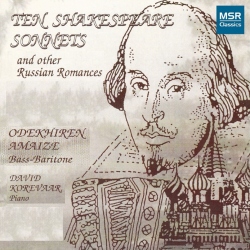
3
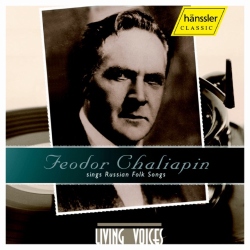
2:24
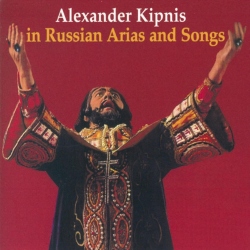
5
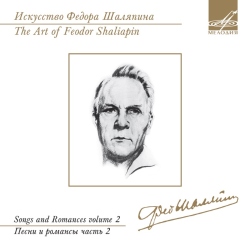
2:30
Copyright Ⓒ 2013 Davinci Finger. All rights reseved
Service Terms & Policy