


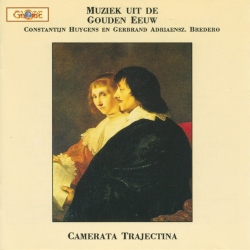
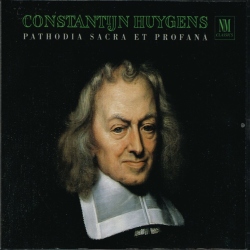
Constantijn Huygens
Released Album
Vocal
-
 February 20, 2012
 -
 March 29, 2011
 -
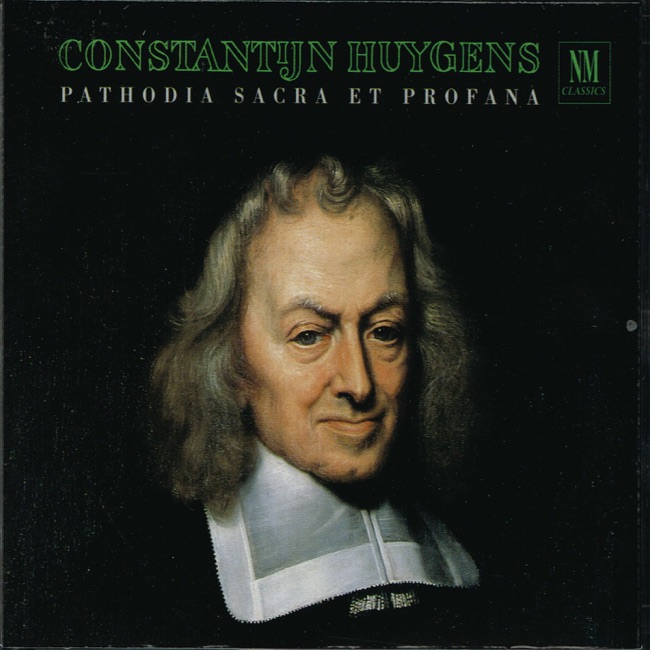 March 27, 2001
Chamber
-
 April 17, 2019
Artist Info
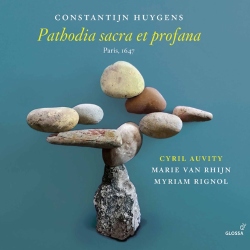
Role:ComposerBirth:1596Death:1687Period:BaroqueGenre:ChoralVocalConstantijn Huygens was a Dutch composer, poet, and diplomat who lived from 1596 to 1687. He was born in The Hague, Netherlands, to a prominent family. His father, also named Constantijn Huygens, was a diplomat and secretary to the Prince of Orange, and his mother, Suzanna van Baerle, was a wealthy merchant's daughter. From a young age, Huygens showed a talent for music and poetry. He received a thorough education in both subjects, studying with some of the best teachers of the time. He also learned to play several instruments, including the lute and the harpsichord. In 1618, Huygens began working as a secretary to the Prince of Orange, Maurice of Nassau. He held this position for over 20 years, during which time he traveled extensively throughout Europe. He met many of the leading musicians and poets of the day, including Claudio Monteverdi and John Donne. Despite his busy diplomatic career, Huygens continued to compose music and poetry. He wrote in a variety of styles, including madrigals, songs, and instrumental music. His works were highly regarded by his contemporaries, and he was considered one of the leading composers of his time. One of Huygens' most famous works is his collection of songs, Pathodia sacra et profana. This collection, published in 1647, contains 41 songs in Latin, Italian, French, and Dutch. The songs are written for solo voice and continuo, and they cover a wide range of subjects, from love and nature to religion and politics. The collection was highly influential and was widely performed throughout Europe. Huygens also wrote several instrumental works, including suites for the lute and harpsichord. His music is characterized by its elegance and refinement, as well as its use of complex harmonies and counterpoint. In addition to his musical achievements, Huygens was also a prolific poet. He wrote in both Dutch and Latin, and his poetry was highly regarded for its wit and sophistication. He was a master of the epigram, a short, witty poem that often contains a surprising twist at the end. Huygens' poetry was also notable for its use of imagery and metaphor. He often drew on classical mythology and literature for inspiration, and his poems are filled with references to gods, heroes, and ancient legends. Despite his many accomplishments, Huygens was not without his critics. Some accused him of being too focused on style over substance, and others criticized his use of complex musical techniques. However, his influence on the development of Dutch music and poetry cannot be overstated. Huygens died in The Hague in 1687, at the age of 91. He left behind a rich legacy of music and poetry that continues to be celebrated and studied to this day. His works are a testament to his talent and his dedication to the arts, and they remain an important part of the Dutch cultural heritage.More....

Related Artists
Copyright Ⓒ 2013 Davinci Finger. All rights reseved
Service Terms & Policy