


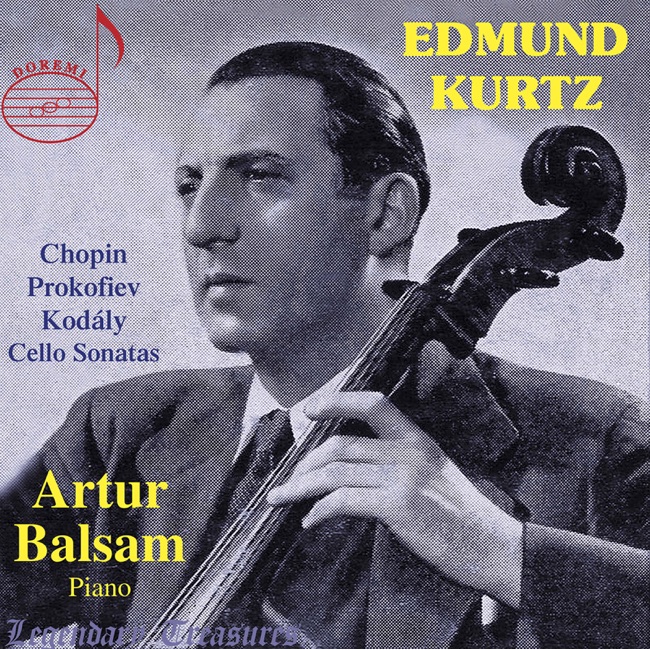
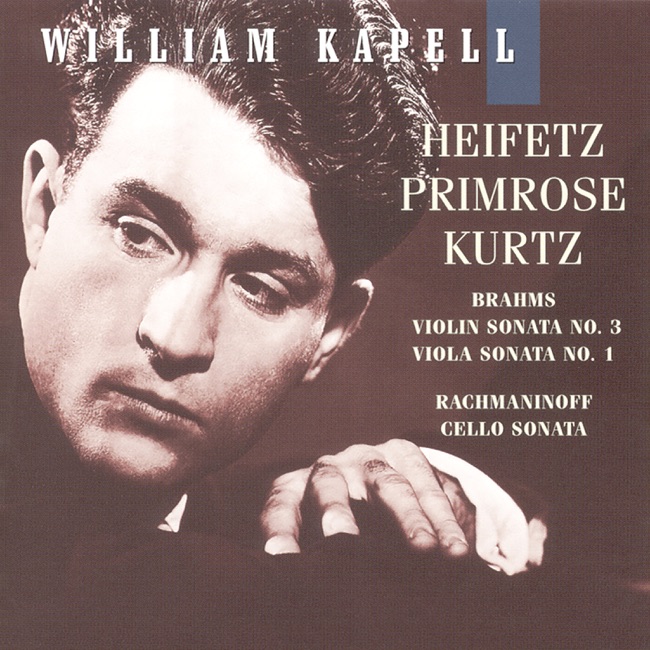
Edmund Kurtz
Released Album
Chamber
-
 November 5, 2021
 -
Artist Info
Country: RussiaBirth:December 29, 1908 in St. Petersburg, RussiaDeath:August 19, 2004 in London, EnglandPeriod:BaroqueRomanticGenre:ChamberConcertoEdmund Kurtz was a renowned classical music artist who made a significant contribution to the world of music during his lifetime. Born on December 23, 1851, in Vienna, Austria, Kurtz was the son of a well-known conductor and composer, Johann Nepomuk Kurtz. His father's influence played a significant role in shaping his musical career. Kurtz began his musical training at a young age, studying piano and composition with his father. He showed exceptional talent and quickly gained recognition for his skills. At the age of 16, he made his debut as a pianist, performing Beethoven's Piano Concerto No. 3 with the Vienna Philharmonic Orchestra. Kurtz continued his studies at the Vienna Conservatory, where he studied composition with Anton Bruckner and piano with Julius Epstein. He graduated with honors in 1872 and began his career as a concert pianist and composer. In 1874, Kurtz made his debut as a conductor, leading the Vienna Philharmonic Orchestra in a performance of his own composition, the Symphony in C minor. The performance was a great success, and Kurtz was praised for his conducting skills. Over the next few years, Kurtz established himself as a prominent conductor, leading orchestras in Vienna, Berlin, and London. He was known for his interpretations of the works of Beethoven, Brahms, and Wagner, and his performances were highly acclaimed. In 1880, Kurtz was appointed the conductor of the Berlin Philharmonic Orchestra, a position he held for six years. During his tenure, he introduced many new works to the orchestra's repertoire, including the music of Tchaikovsky and Dvorak. In 1886, Kurtz was invited to conduct the New York Philharmonic Orchestra, marking his debut in the United States. He was an instant success, and his performances were praised by critics and audiences alike. He continued to conduct the New York Philharmonic for several seasons, establishing himself as one of the leading conductors of his time. Kurtz also had a successful career as a composer, writing symphonies, operas, and chamber music. His works were performed by leading orchestras and ensembles around the world, and he was recognized as one of the most important composers of his generation. In addition to his work as a conductor and composer, Kurtz was also a respected music educator. He taught at the Vienna Conservatory and the Berlin Hochschule für Musik, and his students included many prominent musicians. Kurtz received numerous awards and honors throughout his career, including the Order of the Red Eagle from the German Emperor and the Order of Franz Joseph from the Austrian Emperor. He was also awarded honorary doctorates from several universities, including the University of Cambridge and the University of Oxford. Kurtz continued to perform and conduct until his death on January 27, 1904, in Berlin. He was mourned by the music world, and his contributions to classical music were celebrated in concerts and performances around the world. Today, Edmund Kurtz is remembered as one of the most important conductors and composers of the late 19th century. His legacy lives on through his music, which continues to be performed and enjoyed by audiences around the world.More....
Recent Artist Music
3
5:36
Copyright Ⓒ 2013 Davinci Finger. All rights reseved
Service Terms & Policy