


Ralph Williams
Released Album
Film
-
 January 12, 2018
 -
 December 15, 2017
 -
 June 16, 2017
 -
-
 June 17, 2016
 -
Chamber
-
 November 15, 2022
 -
 June 1, 2011
 -
 February 8, 2011
Artist Info
Ralph Vaughan Williams was a British composer and conductor who is widely regarded as one of the most important figures in 20th-century classical music. Born on October 12, 1872, in Down Ampney, Gloucestershire, England, he was the youngest of three children of a vicar and his wife. His father was a keen amateur musician who encouraged his son's interest in music from an early age. Vaughan Williams began his formal musical education at the Royal College of Music in London, where he studied composition with Charles Villiers Stanford and Hubert Parry. He later continued his studies with Max Bruch in Berlin and Maurice Ravel in Paris. During this time, he also became interested in folk music and began collecting and transcribing traditional songs from around England. In 1903, Vaughan Williams returned to England and began teaching at the Royal College of Music. He also began composing in earnest, and his early works were heavily influenced by the folk music he had collected. His first major success came in 1910 with the premiere of his Fantasia on a Theme by Thomas Tallis, which was widely praised for its lush harmonies and evocative atmosphere. Over the next few years, Vaughan Williams continued to compose and conduct, and his reputation as a leading figure in British music grew. In 1914, he joined the Royal Army Medical Corps and served as a stretcher-bearer in France. The experience had a profound impact on him, and many of his later works were inspired by his wartime experiences. After the war, Vaughan Williams returned to his musical career and continued to compose and conduct. He also became involved in music education, serving as a professor of composition at the Royal College of Music from 1920 to 1940. During this time, he mentored a number of young composers, including Benjamin Britten and Michael Tippett. Vaughan Williams' music continued to evolve throughout his career, and he experimented with a wide range of styles and genres. His works include symphonies, operas, choral music, and chamber music, as well as numerous arrangements of folk songs and hymns. Some of his most famous works include the Symphony No. 5, the opera The Pilgrim's Progress, and the choral work Dona Nobis Pacem. Throughout his career, Vaughan Williams received numerous awards and honors for his contributions to music. In 1935, he was awarded the Order of Merit, one of the highest honors that can be bestowed on a British citizen. He was also awarded the Gold Medal of the Royal Philharmonic Society in 1951 and the Queen's Medal for Music in 1953. Vaughan Williams continued to compose and conduct until his death on August 26, 1958, at the age of 85. His legacy as one of the most important figures in 20th-century classical music continues to be felt today, and his works are still widely performed and recorded around the world.More....
Recent Artist Music
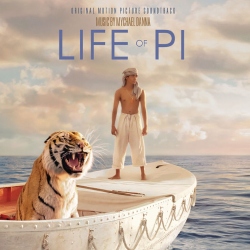
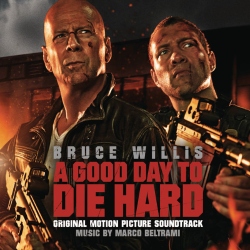
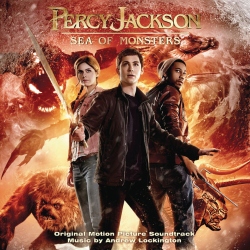
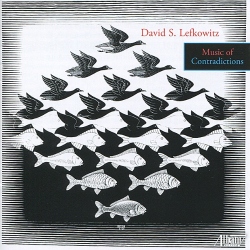
12
3:7


Copyright Ⓒ 2013 Davinci Finger. All rights reseved
Service Terms & Policy