


Julio Graña
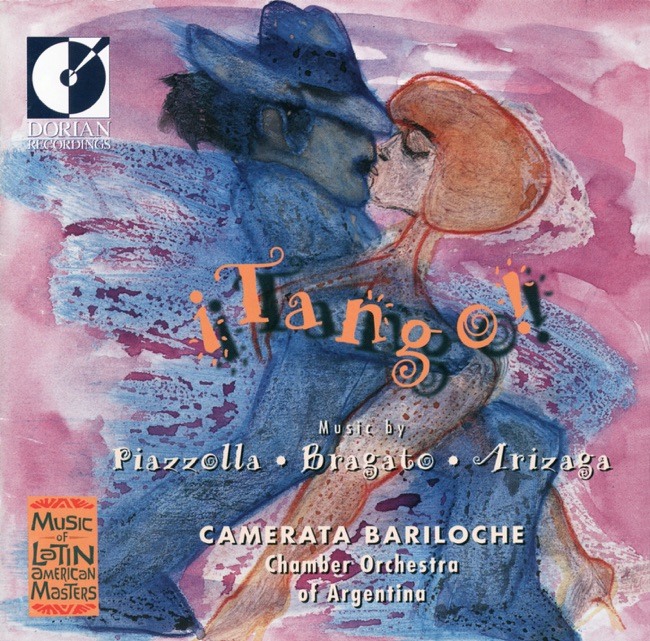
Artist Info
Julio Graña was a renowned classical music artist who was born on August 12, 1937, in Montevideo, Uruguay. He was the youngest of three siblings and grew up in a family that was passionate about music. His father was a violinist, and his mother was a pianist, which meant that music was always a part of his life. Graña began his musical education at the age of six when he started taking piano lessons with his mother. He showed a natural talent for the instrument and quickly progressed. At the age of 12, he started studying the violin, which would become his primary instrument. In 1955, Graña moved to Buenos Aires, Argentina, to continue his musical studies. He enrolled at the National Conservatory of Music, where he studied under the tutelage of renowned violinist Alberto Lysy. Graña's talent and dedication to his craft were evident, and he quickly became one of Lysy's star pupils. After completing his studies in Buenos Aires, Graña moved to Europe to further his musical education. He spent several years studying in Paris, France, and Salzburg, Austria, where he worked with some of the most prominent violinists of the time. In 1962, Graña made his debut as a soloist with the Montevideo Symphony Orchestra. The performance was a resounding success, and Graña quickly established himself as one of the most talented violinists of his generation. Over the next few years, Graña performed extensively throughout South America, Europe, and the United States. He played with some of the world's most prestigious orchestras, including the Berlin Philharmonic, the Vienna Philharmonic, and the New York Philharmonic. In 1970, Graña was invited to perform at the Tchaikovsky Competition in Moscow, Russia. The competition was one of the most prestigious in the world, and Graña's performance was nothing short of spectacular. He was awarded the second prize, which was a significant achievement for a musician from South America. Throughout his career, Graña received numerous awards and accolades for his contributions to classical music. In 1975, he was awarded the National Prize for Music in Uruguay, and in 1982, he was awarded the Order of Merit by the government of Austria. Graña was also a dedicated teacher and mentor to young musicians. He taught at several prestigious music schools, including the National Conservatory of Music in Buenos Aires and the Mozarteum University of Salzburg. In addition to his work as a soloist and teacher, Graña was also a passionate chamber musician. He played with some of the most renowned chamber ensembles of his time, including the Amadeus Quartet and the Guarneri Quartet. Graña's playing was characterized by its technical brilliance and emotional depth. He had a unique ability to convey the emotional content of a piece of music, and his performances were always deeply moving. Sadly, Graña's career was cut short when he passed away on December 28, 1994, at the age of 57. However, his legacy lives on through his recordings and the countless musicians he inspired and mentored throughout his career. In conclusion, Julio Graña was a remarkable musician who made significant contributions to the world of classical music. His talent, dedication, and passion for his craft were evident in every performance, and his legacy continues to inspire musicians around the world.More....
Copyright Ⓒ 2013 Davinci Finger. All rights reseved
Service Terms & Policy