


Karel Goeyvaerts
Released Album
Chamber
-
 May 8, 2020
Keyboard
-
 September 25, 2001
 -
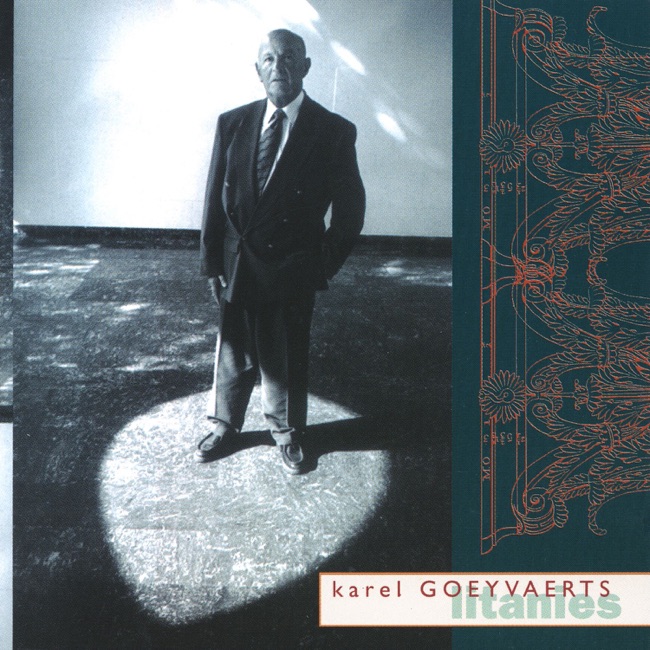 October 26, 1999
 -
 January 1, 1997
Artist Info
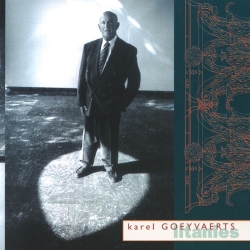
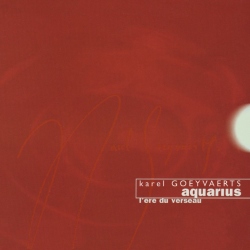
Role:ComposerBirth:June 8, 1923 in Antwerp, BelgiumDeath:1993 in Antwerp, BelgiumPeriod:ContemporaryGenre:Avant-GardeChoralKeyboardOrchestralKarel Goeyvaerts was a Belgian composer who was born on June 8, 1923, in Antwerp, Belgium. He was the son of a music teacher and grew up in a musical family. His father was a conductor and his mother was a pianist. Goeyvaerts began his musical education at a young age, studying piano and music theory with his parents. In 1943, Goeyvaerts enrolled at the Royal Flemish Conservatory in Antwerp, where he studied composition with Flor Peeters and piano with Marcel Gazelle. He graduated in 1947 with a degree in composition. After graduation, he worked as a music teacher and a pianist, but he continued to compose music in his spare time. Goeyvaerts' early works were influenced by the music of Anton Webern and Arnold Schoenberg, and he was interested in serialism and atonality. In 1951, he attended the Darmstadt Summer Courses for New Music, where he met Karlheinz Stockhausen and other avant-garde composers. This experience had a profound impact on Goeyvaerts, and he began to experiment with new techniques and forms in his music. In 1952, Goeyvaerts composed his first major work, "Sonata for Two Pianos," which was based on a twelve-tone row. This piece was well-received and helped establish Goeyvaerts as a leading figure in the Belgian avant-garde music scene. He continued to compose works that explored new techniques and forms, including "Nummer 1" (1955), which was the first piece of music to use electronic sounds. In 1957, Goeyvaerts moved to Cologne, Germany, where he worked as a freelance composer and music teacher. He became involved with the Cologne School of electronic music, which was led by Stockhausen. Goeyvaerts continued to experiment with electronic music and composed several works that combined electronic and acoustic sounds. One of Goeyvaerts' most significant works is "Aquarius," which he composed in 1965. This piece is a large-scale work for orchestra and electronic sounds, and it was inspired by the astrological age of Aquarius. The piece is divided into twelve sections, each of which corresponds to one of the signs of the zodiac. "Aquarius" is a complex and challenging work that showcases Goeyvaerts' innovative approach to composition. In addition to his work as a composer, Goeyvaerts was also a respected music theorist. He wrote several influential articles and books on music theory, including "The ABC of Serialism" (1953) and "The Music of the Twentieth Century" (1962). These works helped to establish Goeyvaerts as a leading authority on contemporary music. Goeyvaerts continued to compose music throughout his life, and his later works were characterized by a more minimalist and meditative style. He died on February 3, 1993, in Antwerp, Belgium, at the age of 69. In conclusion, Karel Goeyvaerts was a pioneering composer who played a significant role in the development of contemporary music. His innovative approach to composition and his willingness to experiment with new techniques and forms helped to push the boundaries of classical music. Goeyvaerts' legacy continues to inspire and influence composers today, and his contributions to the world of music will not be forgotten.More....
Recent Artist Music
Copyright Ⓒ 2013 Davinci Finger. All rights reseved
Service Terms & Policy