


Max Deutsch
Released Album
Symphony
-
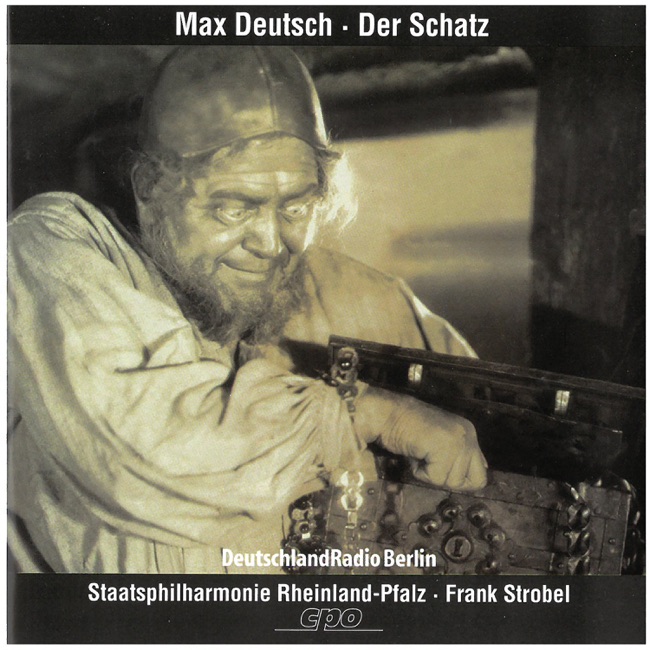 April 19, 2005
Orchestral
-
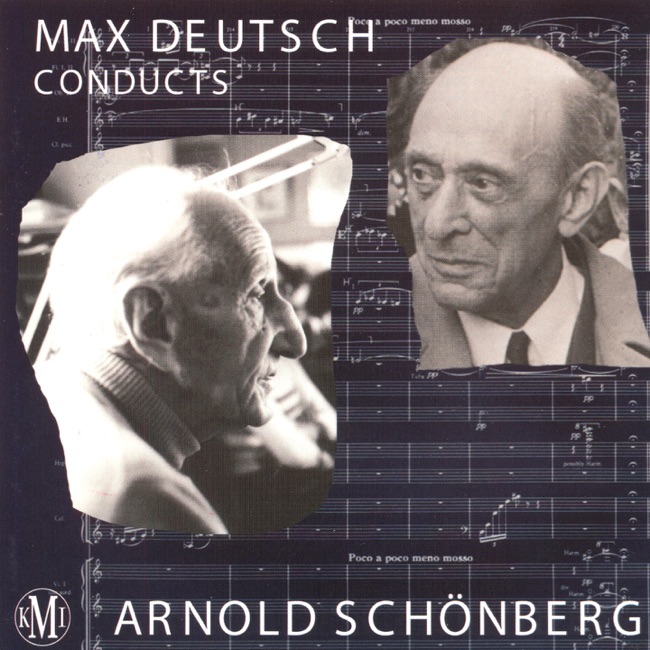 December 10, 2013
Artist Info
Role:Composer Conductor PerformerCountry: FranceBirth:November 17, 1892 in Vienna, AustriaDeath:November 22, 1982 in Paris, FranceMax Deutsch was a prominent composer and music theorist of the 20th century. Born on November 22, 1892, in Vienna, Austria, Deutsch was the son of a wealthy Jewish family. His father, Moritz Deutsch, was a successful businessman, and his mother, Rosa Deutsch, was a talented pianist. From a young age, Deutsch showed a keen interest in music, and his parents encouraged him to pursue his passion. Deutsch began his musical education at the Vienna Conservatory, where he studied composition with Franz Schreker and Arnold Schoenberg. He also studied piano with Emil von Sauer and theory with Guido Adler. In 1914, he received his diploma in composition, and he continued his studies with Schoenberg until 1917. During World War I, Deutsch served in the Austrian army, but he was discharged due to health problems. After the war, he returned to Vienna and began working as a music critic for various newspapers and magazines. He also taught music theory and composition at the Vienna Conservatory. In 1925, Deutsch moved to Paris, where he became a student of Nadia Boulanger. Boulanger was a renowned music teacher who had taught many of the leading composers of the 20th century, including Aaron Copland, Philip Glass, and Quincy Jones. Under Boulanger's guidance, Deutsch developed his own unique style of composition, which combined elements of Schoenberg's twelve-tone technique with traditional tonality. Deutsch's early works were heavily influenced by Schoenberg's atonal music, but he gradually moved away from this style and began incorporating tonal elements into his compositions. His music was characterized by its complex harmonies, intricate rhythms, and unconventional forms. He was particularly interested in the use of counterpoint, and many of his works feature intricate contrapuntal textures. One of Deutsch's most significant works is his opera "Le Procès," which he composed between 1926 and 1930. The opera is based on Franz Kafka's novel "The Trial" and tells the story of a man who is arrested and put on trial for a crime that is never specified. The opera is notable for its complex score, which features a large orchestra and chorus, as well as a number of soloists. The music is highly expressive and reflects the psychological turmoil of the protagonist. Another important work by Deutsch is his "Symphony No. 1," which he composed in 1933. The symphony is a large-scale work that features a full orchestra and is divided into four movements. The music is characterized by its complex harmonies and intricate rhythms, and it reflects Deutsch's interest in counterpoint. The symphony was well-received by critics and established Deutsch as one of the leading composers of his generation. In addition to his work as a composer, Deutsch was also a respected music theorist. He wrote extensively on the music of Schoenberg and other contemporary composers, and his writings were highly influential in the development of modern music theory. He was particularly interested in the use of serialism in music, and he developed his own system of serial composition, which he called "pantonalism." Deutsch's career was interrupted by the outbreak of World War II. As a Jew, he was forced to flee Paris and go into hiding. He spent much of the war living in the south of France, where he continued to compose and teach music. After the war, he returned to Paris and resumed his career as a composer and music theorist.More....
Copyright Ⓒ 2013 Davinci Finger. All rights reseved
Service Terms & Policy