


Walter Siegel
Released Album
Choral
-
 June 21, 2019
 -
-
 March 5, 2014
Artist Info
Role:PerformerWalter Siegel was a renowned classical music artist who made significant contributions to the world of music. Born on May 12, 1928, in Vienna, Austria, Siegel was the son of a prominent musician and composer, who played a significant role in shaping his musical career. Siegel's love for music began at an early age, and he started playing the piano when he was just five years old. He showed exceptional talent and was soon recognized as a child prodigy. His father, who was also his first music teacher, recognized his son's potential and encouraged him to pursue a career in music. Siegel's musical education began at the Vienna Conservatory, where he studied under the tutelage of some of the most renowned music teachers of the time. He excelled in his studies and was soon recognized as one of the most promising young musicians of his generation. In 1945, Siegel's family moved to the United States, where he continued his musical education at the Juilliard School in New York City. He studied under the guidance of some of the most prominent music teachers of the time, including Rosina Lhévinne and Vladimir Horowitz. Siegel's talent and hard work paid off, and he soon began to make a name for himself in the world of music. He made his debut as a soloist with the New York Philharmonic in 1950, playing Beethoven's Piano Concerto No. 3. The performance was a huge success, and Siegel received critical acclaim for his virtuosity and musicality. Over the next few years, Siegel continued to perform with some of the most prestigious orchestras in the world, including the Boston Symphony Orchestra, the Chicago Symphony Orchestra, and the London Symphony Orchestra. He also performed in some of the most renowned concert halls in the world, including Carnegie Hall, the Royal Albert Hall, and the Concertgebouw in Amsterdam. Siegel's repertoire was vast and included works by some of the most celebrated composers of all time, including Beethoven, Mozart, Chopin, and Brahms. He was particularly known for his interpretations of Beethoven's piano sonatas, which he performed with great passion and intensity. In addition to his performances as a soloist, Siegel was also a sought-after chamber musician. He performed with some of the most renowned chamber ensembles of the time, including the Budapest Quartet and the Guarneri Quartet. Siegel's musical career spanned several decades, and he continued to perform well into his seventies. He was known for his dedication to his craft and his unwavering commitment to excellence. He was also a beloved teacher, and many of his students went on to have successful careers in music. Throughout his career, Siegel received numerous awards and accolades for his contributions to the world of music. In 1960, he was awarded the prestigious Avery Fisher Prize, which is awarded annually to outstanding classical musicians. He was also awarded the National Medal of Arts in 1992, which is the highest honor given to artists and arts patrons by the United States government. Siegel's legacy as a musician and teacher continues to inspire generations of musicians. His dedication to his craft and his unwavering commitment to excellence serve as a testament to the power of music to enrich our lives and bring us together.More....
Recent Artist Music
2
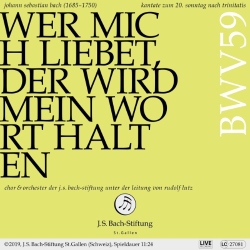
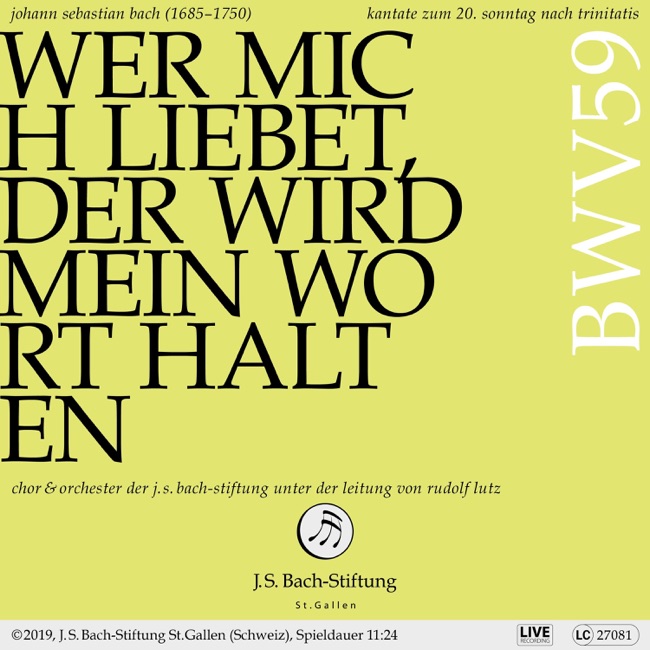
Cantata no. 59, "He who loves me will keep my word", BWV 59
I. Duetto. Wer mich liebet, der wird mein Wort halten
3:23
3
Cantata no. 59, "He who loves me will keep my word", BWV 59
No. 3, Komm, Heiliger Geist, Herre Gott
1:23
Copyright Ⓒ 2013 Davinci Finger. All rights reseved
Service Terms & Policy