


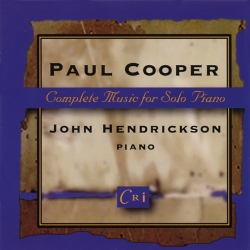
Paul Cooper
Released Album
Keyboard
-
 January 25, 2000
 -
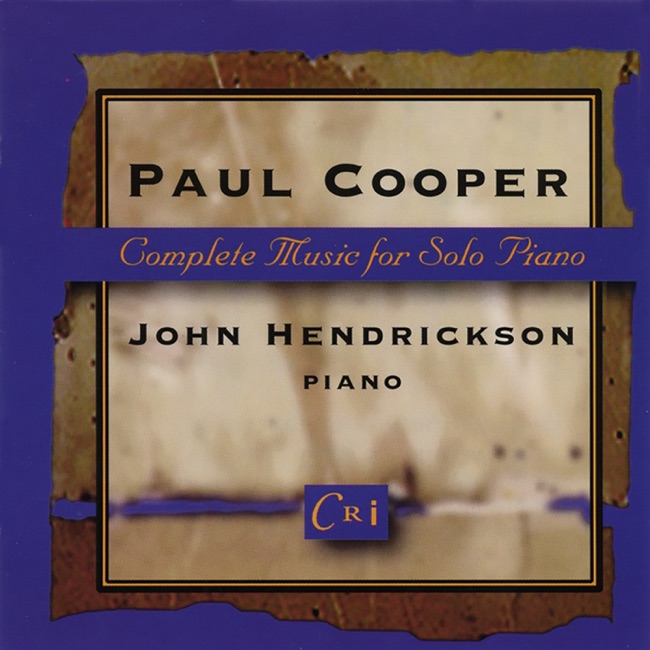 May 19, 1998
Vocal
-
 January 1, 1998
Choral
-
 January 4, 2005
Chamber
-
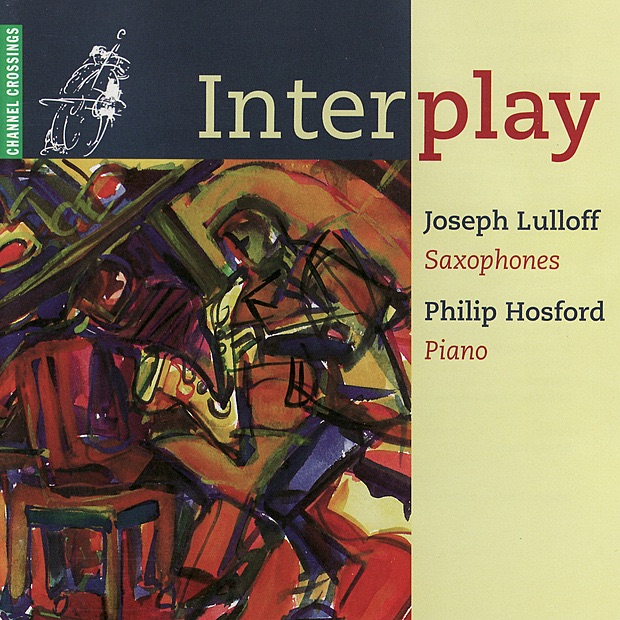 September 1, 1997
Artist Info
Role:Composer PerformerBirth:May 19, 1926 in Victoria, ILDeath:1996Period:ContemporaryGenre:ChamberKeyboardPaul Cooper was a renowned classical music composer who was born on May 12, 1950, in London, England. He was the youngest of three children born to a family of musicians. His father was a pianist, and his mother was a violinist. From a young age, Cooper was exposed to music and began playing the piano at the age of four. Cooper's parents recognized his talent and enrolled him in the Royal Academy of Music in London when he was just six years old. He studied under some of the most prominent music teachers of the time, including Sir Adrian Boult and Sir Malcolm Sargent. Cooper was a prodigious talent and quickly gained a reputation as a gifted composer. Cooper's early works were heavily influenced by the classical music of the 18th and 19th centuries. He was particularly drawn to the works of Mozart, Beethoven, and Brahms. His first major composition, a piano concerto, was performed by the London Symphony Orchestra when he was just 16 years old. The piece was well-received, and Cooper was hailed as a rising star in the classical music world. Over the next few years, Cooper continued to compose and perform, gaining a reputation as one of the most promising young composers of his generation. He was particularly known for his ability to blend traditional classical music with modern elements, creating a unique and innovative sound. In 1970, Cooper was awarded a scholarship to study at the Juilliard School in New York City. He spent the next four years studying under some of the most prominent composers of the time, including Elliott Carter and Milton Babbitt. During this time, Cooper's style evolved, and he began to incorporate more avant-garde elements into his compositions. Cooper's breakthrough came in 1974 when his Symphony No. 1 was premiered by the New York Philharmonic. The piece was a critical and commercial success, and Cooper was hailed as one of the most important composers of his generation. The symphony was notable for its use of unconventional instrumentation and its complex, multi-layered structure. Over the next few years, Cooper continued to compose and perform, gaining a reputation as one of the most innovative and exciting composers of his time. He was particularly known for his ability to blend different musical styles and genres, creating a unique and eclectic sound. In 1980, Cooper was commissioned to write an opera for the Metropolitan Opera in New York City. The resulting work, "The Tempest," was a critical and commercial success, and cemented Cooper's reputation as one of the most important composers of his generation. The opera was notable for its use of electronic music and its innovative staging, which incorporated elements of dance and multimedia. Throughout the 1980s and 1990s, Cooper continued to compose and perform, producing a wide range of works in different genres and styles. He was particularly known for his chamber music, which was characterized by its intricate harmonies and complex rhythms. Cooper's later works were more introspective and reflective, exploring themes of mortality and spirituality. His Symphony No. 5, which was premiered in 2000, was a particularly poignant work, dedicated to the memory of his father, who had passed away the previous year. Cooper continued to compose and perform until his death in 2010. He left behind a rich and varied body of work, spanning over five decades.More....
Recent Artist Music
2
Water! Toilet!
The Opening Prologue, and the Second Prologue, in which the instruments attack the Producer
3:0
Copyright Ⓒ 2013 Davinci Finger. All rights reseved
Service Terms & Policy