


Jani Christou
Artist Info
Role:ComposerCountry: GreeceBirth:January 8, 1926 in Heliopolis, EgyptDeath:January 8, 1970 in Athens, GreecePeriod:ContemporaryJani Christou was a Greek composer who was born on January 9, 1926, in Heliopolis, Egypt. He was the son of a wealthy Greek family, and his father was a successful businessman. Christou grew up in a privileged environment, and his family encouraged his interest in music from an early age. Christou began his musical education at the Athens Conservatory, where he studied piano and composition. He later continued his studies in Paris, where he studied with Olivier Messiaen and Darius Milhaud. During this time, he also became interested in the avant-garde music of the time, including the works of John Cage and Karlheinz Stockhausen. In the 1950s, Christou returned to Greece and began to establish himself as a composer. He was a founding member of the Greek Composers' Union and was active in promoting contemporary music in Greece. He also worked as a music critic and wrote articles on contemporary music for various publications. Christou's early works were influenced by the neoclassical style of Stravinsky and the serialism of Schoenberg. However, he soon began to develop his own unique style, which was characterized by a focus on sound and the use of unconventional techniques. He was particularly interested in exploring the relationship between sound and silence, and his works often featured long periods of silence or very quiet sounds. One of Christou's most significant works is Epicycle, which was composed in 1968. The piece is scored for orchestra, choir, and soloists, and it is based on the idea of the cycle of life and death. The work is divided into four sections, each of which represents a different stage of life. The piece is notable for its use of unconventional techniques, including the use of spoken text and the incorporation of non-musical sounds. Another important work by Christou is Anaparastasis I, which was composed in 1968. The piece is scored for orchestra and features a series of musical gestures that are repeated and transformed throughout the work. The piece is notable for its use of unconventional notation, which includes graphic symbols and instructions for the performers to improvise. Christou's later works became even more experimental, and he began to incorporate elements of performance art and theater into his compositions. He was particularly interested in exploring the relationship between music and ritual, and his works often featured elaborate staging and choreography. Unfortunately, Christou's career was cut short when he died in a car accident in 1970. He was only 44 years old at the time of his death, but he had already established himself as one of the most important composers of his generation. His works continue to be performed and studied today, and he is remembered as a pioneer of experimental music and a visionary composer who pushed the boundaries of what was possible in music.More....
Recent Artist Music
1
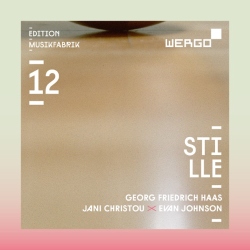
Anaparastasis III: The Pianist,
Anaparastasis III "The Pianist" für Schauspieler, Dirigent, Ensemble und Continuum
16:33
Copyright Ⓒ 2013 Davinci Finger. All rights reseved
Service Terms & Policy