


Georg Joseph Vogler
Released Album
Miscellaneous
-
 June 27, 2004
 -
 December 1, 1992
Opera
-
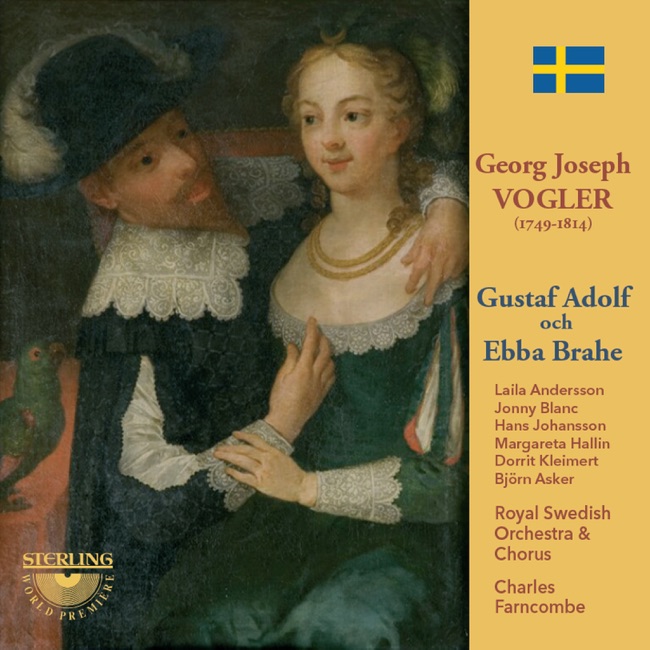 November 1, 2019
 -
 May, 1999
Choral
-
 February 12, 2016
 -
 November 13, 2015
 -
 November 19, 2013
 -
 September 29, 2009
Orchestral
-
 April 1, 2012
 -
 November 30, 2004
Artist Info
Role:ComposerCountry: GermanyBirth:June 15, 1749 in PleichachDeath:May 6, 1814 in Darmstadt, GermanyPeriod:ClassicalGenre:OperaOrchestralSymphonyGeorg Joseph Vogler was a German composer, organist, and music theorist who lived from 1749 to 1814. He was born in Würzburg, Germany, to a family of musicians. His father, Johann Caspar Vogler, was a court musician, and his mother, Maria Salome Vogler, was a singer. Georg Joseph Vogler showed an early interest in music and began his musical education at a young age. Vogler's musical education began with his father, who taught him the basics of music theory and keyboard playing. He then studied with the organist Johann Valentin Rathgeber, who was the director of music at the Würzburg court. Rathgeber taught Vogler the art of improvisation, which would become a hallmark of Vogler's later compositions. In 1765, Vogler moved to Mannheim, where he studied with the composer Johann Stamitz. Stamitz was a leading figure in the Mannheim school of composers, which was known for its innovative use of orchestration and harmony. Vogler learned a great deal from Stamitz and became a skilled composer in his own right. Vogler's first major appointment came in 1773, when he was appointed court organist in Mannheim. He also served as the director of music at the Mannheim court, where he was responsible for organizing concerts and other musical events. During this time, Vogler composed a number of works for the organ, including his famous "Organ Concerto in G Major." In 1778, Vogler moved to Vienna, where he became a prominent figure in the city's musical scene. He was appointed court composer to Emperor Joseph II and was also a professor of music theory at the University of Vienna. During this time, Vogler composed a number of operas, including "Castor and Pollux" and "Almira." In 1786, Vogler moved to Stockholm, where he was appointed court conductor to King Gustav III of Sweden. He remained in Sweden for several years, during which time he composed a number of works for the Swedish court, including his famous "Symphony in D Major." Vogler also became interested in the study of acoustics and developed a new instrument called the "orchestrion," which was a combination of a pipe organ and a piano. In 1799, Vogler returned to Germany and settled in Darmstadt, where he became the director of music at the court of the Grand Duke of Hesse. During this time, Vogler composed a number of works for the court, including his famous "Requiem in D Minor." He also continued to teach music theory and composition, and his students included the composer Carl Maria von Weber. Vogler's compositions were known for their innovative use of harmony and orchestration. He was also known for his skill as an improviser, and his performances on the organ and other keyboard instruments were legendary. Vogler's music was highly regarded during his lifetime, and he was considered one of the leading composers of his time. Today, Vogler's music is less well-known than that of some of his contemporaries, but his contributions to the development of classical music are still recognized. His innovative use of harmony and orchestration influenced many composers who came after him, and his work as a music theorist helped to advance the understanding of music in general. Vogler's legacy as a composer, performer, and teacher continues to be felt in the world of classical music today.More....
Recent Artist Music
2
2:27
7

Variations and Capriccio on "Marlborough, Going to War"
Variation 6. Larghetto mistico-ecclesiastico
2:9
8
32




Copyright Ⓒ 2013 Davinci Finger. All rights reseved
Service Terms & Policy