


Luigi Dallapiccola
Released Album
Keyboard
-
 February 2, 2024
 -
 November 11, 2022
 -
 November 4, 2022
 -
 April 23, 2021
 -
-
 November 6, 2020
Chamber
-
-
 June 16, 2017
 -
 May 12, 2017
 -
 August 14, 2015
 -
 April 15, 2014
 -
 September 1, 2013
Vocal
-
 November 30, 2020
 -
 June 23, 2015
 -
-
 January 4, 2010
 -
 March 5, 2007
 -
 January 10, 2006
Orchestral
-
 February 7, 2020
 -
 June 2, 2017
 -
-
-
-
 May 13, 2003
Artist Info
Role:Composer ConductorCountry: ItalyBirth:February 3, 1904 in Pisino d'Istria, ItalyDeath:February 19, 1975 in Florence, ItalyPeriod:ModernGenre:ChamberChoralKeyboardVocalLuigi Dallapiccola was an Italian composer who was born on February 3, 1904, in Pisino, Istria, which was then part of the Austro-Hungarian Empire. He was the son of a pharmacist and grew up in a family that was passionate about music. His father played the piano, and his mother sang in the local church choir. Dallapiccola began playing the piano at a young age and showed an early talent for music. In 1921, Dallapiccola moved to Florence to study at the Conservatorio di Musica Luigi Cherubini. He studied composition with Ildebrando Pizzetti and piano with Luigi Dallapiccola. He graduated in 1925 and began working as a music teacher in Florence. In 1927, he married Laura Luzzatto, a pianist and musicologist who would become his lifelong collaborator. Dallapiccola's early works were influenced by the music of Debussy, Ravel, and Stravinsky. He was also interested in the music of Arnold Schoenberg and the Second Viennese School. In the 1930s, he began to experiment with twelve-tone composition, a technique that he would use throughout his career. During World War II, Dallapiccola was active in the Italian resistance movement. He was arrested by the fascist authorities in 1944 and imprisoned for several months. After the war, he became a professor of composition at the Conservatorio di Musica Luigi Cherubini in Florence. Dallapiccola's most famous work is his opera "Il prigioniero" (The Prisoner), which he began composing in 1944 and completed in 1948. The opera tells the story of a political prisoner who is tortured and ultimately executed. It is a powerful indictment of fascism and totalitarianism and has been performed all over the world. Dallapiccola's other notable works include the "Canti di prigionia" (Songs of Imprisonment), a cycle of six songs for baritone and orchestra that he composed in 1941-42 while he was in hiding from the fascist authorities. The songs are based on texts by political prisoners and are a moving tribute to the human spirit in the face of oppression. Another important work is the "Quaderno musicale di Annalibera" (Musical Notebook of Annalibera), a cycle of eleven piano pieces that Dallapiccola composed in 1952-53. The pieces are based on a twelve-tone row that Dallapiccola created from the name of his daughter, Annalibera. The cycle is a virtuosic tour de force that showcases Dallapiccola's mastery of the piano and his innovative use of twelve-tone composition. Dallapiccola's music is characterized by its lyricism, its emotional intensity, and its intellectual rigor. He was a master of counterpoint and harmony and was able to create complex musical structures that were also deeply expressive. His music is often compared to that of Alban Berg and Anton Webern, but it has a distinctive Italian flavor that sets it apart. Dallapiccola continued to compose and teach until his death on February 19, 1975, in Florence. He was a major figure in Italian music in the twentieth century and left a lasting legacy as a composer, teacher, and humanist. His music continues to be performed and admired by musicians and audiences around the world.More....
Recent Artist Music
1
7:20
3
Small Concerto For Muriel Corvreux for piano & chamber orchestra
Pastorale, Girotondo e Ripresa
8:57
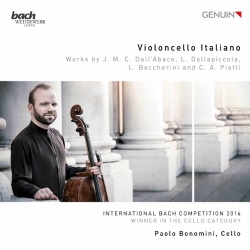
6
Small nocturnal music for orchestra or chamber ensemble
Piccola Musica Notturna (A Little Night Music)
7:39
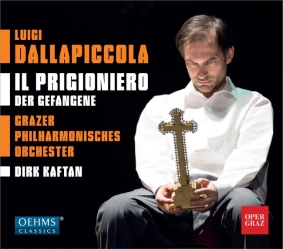
11
Cori (2) by Michelangelo Buonarroti il giovane: Excellent series
No. 1. Il coro delle malmaritate
4:37
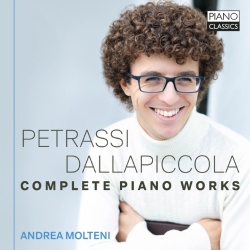
15
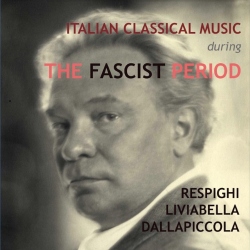
Small Concerto For Muriel Corvreux for piano & chamber orchestra
I. Pastorale, girotondo e ripresa
9:16
Copyright Ⓒ 2013 Davinci Finger. All rights reseved
Service Terms & Policy