


Vladimir Ussachevsky
Released Album
Electronic/Computer
-
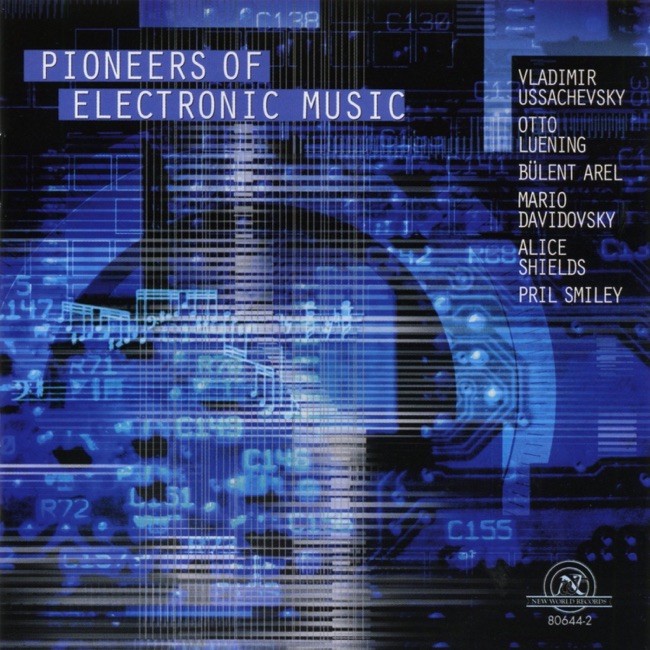 April 4, 2006
Choral
-
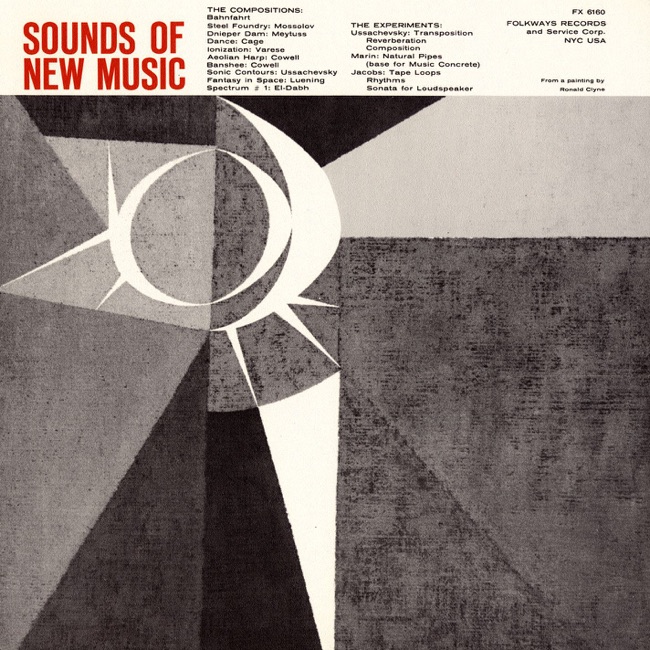 January 1, 1957
Chamber
-
 August 12, 2016
 -
 December 28, 1995
Artist Info
Role:Composer PerformerCountry: RussiaBirth:November 3, 1911 in Hailar, Manchuria, ChinaDeath:January 4, 1990 in New York City, NYPeriod:ContemporaryModernGenre:Avant-GardeVladimir Ussachevsky was a Russian-American composer who was born on November 3, 1911, in Hailar, China. His parents were Russian émigrés who had fled the Russian Revolution and settled in China. Ussachevsky's father was a mining engineer, and his mother was a pianist. Ussachevsky's early exposure to music came from his mother, who taught him to play the piano. In 1921, Ussachevsky's family moved to Harbin, China, where he continued his piano studies. In 1925, the family moved to Vladivostok, Russia, where Ussachevsky began to study composition with Alexander Tcherepnin. In 1928, Ussachevsky's family moved again, this time to Paris, France, where he continued his studies with Tcherepnin. In 1931, Ussachevsky moved to the United States to study at the Eastman School of Music in Rochester, New York. He studied composition with Bernard Rogers and Howard Hanson and earned his Bachelor of Music degree in 1935. Ussachevsky then went on to study at the Juilliard School in New York City, where he studied with Frederick Jacobi and earned his Master of Music degree in 1937. Ussachevsky's early compositions were influenced by the neoclassical style of Stravinsky and the Second Viennese School. However, in the 1950s, Ussachevsky became interested in electronic music and began to experiment with tape recorders and other electronic equipment. He became one of the pioneers of electronic music in the United States. In 1951, Ussachevsky and Otto Luening founded the Columbia-Princeton Electronic Music Center at Columbia University in New York City. The center was one of the first electronic music studios in the United States and was instrumental in the development of electronic music in the country. Ussachevsky's most famous work is his piece "Piece for Tape Recorder," which he composed in 1956. The piece was one of the first works of electronic music to be widely performed and recorded. It features a series of electronic sounds that are manipulated and transformed using tape recorders. Ussachevsky's other notable works include "Wireless Fantasy" (1960), "No Exit" (1961), and "Of Wood and Brass" (1965). "Wireless Fantasy" is a piece for tape recorder and orchestra that features electronic sounds and live instruments. "No Exit" is an opera based on the play by Jean-Paul Sartre. "Of Wood and Brass" is a piece for orchestra and tape recorder that features electronic sounds and live instruments. Ussachevsky's music was often characterized by its use of electronic sounds and its incorporation of traditional instruments. He was known for his innovative use of technology and his ability to create new sounds and textures. Ussachevsky received numerous awards and honors throughout his career, including a Guggenheim Fellowship in 1959 and a National Endowment for the Arts grant in 1974. He was also a member of the American Academy of Arts and Letters. Ussachevsky died on January 4, 1990, in New York City. He was 78 years old. His contributions to the development of electronic music in the United States were significant, and his legacy continues to influence contemporary composers and musicians.More....

Related Artists
Copyright Ⓒ 2013 Davinci Finger. All rights reseved
Service Terms & Policy